
Many years since my intermediate education days, I grapple with the right wording to describe how I felt about History. I was a self-declared ‘lost cause’ at Maths, so naturally I tended to stare up at the ceiling in Algebra but would soon regain mild ‘interest’ during English only because I was not flunking every other exam.
But History!… I mean in their loincloth, people who looked like me were always outsmarted, outgunned or perpetually oscillating between being smashed in the battle, brought to heel, or fleeing off into the mountains and therefore did not inspire much confidence on a young, impressionable pubescent boy.
If you took away Shaka (who was often loosely referred to as Shaka Zulu) and his battle formations and military innovations, one could scarcely find any worthwhile heroes to write home about. Coming to think of it, the entire framing revolved around the European: whom he’d met – or fought – during his trek away from his own disaffection in the west coast in pursuit of his own happiness in an interior no man who looked like him had ever trod.
Everyone else was a footnote, if they were lucky. Factor into this the now-derogatory pejoratives like Hottentot and one can only imagine how the Coloured learner must’ve felt. This, of course was by no means accidental. Rather, it was a meticulous inculcation designed along the logics of colonialism and all the various forms of repressions that are spun from there. After all, what history could one impart on ‘hewers of wood’ other than the sort that reminded them of their primitive origins and how their vassal station was simply how things had always been.
We may not have realised it as kids who were bent on making the next Grade but the landmark episode – signifyed by the docking of the three ships – the Reijger, Drommedaris and Die Goede Hoop – at the Cape of Good Hope probably meant one thing to the black learner and something else entirely to the white or brown boy in the next desk. Note: these names are virtually welded to memory because of how they were so continuously repeated. In that Eurocentric context, generations of kids then had to make do with a dwarfish history that either barely and/or selectively mentioned their forebears or was a gross misrepresentation of the land they call home and the neighbours with whom they shared it.
This bit of anecdote comes following the Department of Basic Education’s (DBE) appointment of a Ministerial Task Team back in 2019 to review the History curriculum and which in 2025 presented its draft to the Minister. Amongst its terms of reference was the developing of a new History curriculum for Grades 4 to 12, carrying out provincial consultations, screening textbooks for alignment with the proposed new curriculum and so on. With the deadline for submissions long underway, this matter is now at an advanced stage and both educational experts and pundits are either applauding or asking picky questions.
The proposed new Afrocentric posture, some academics write on a Daily Maverick piece, ‘will help learners understand that communities and kingdoms in Africa were sophisticated, innovative and had global connections long before the colonial era’. It will vehemently seek to refute British historian Hugh Trevor-Roper’s conclusion that ‘there is only the history of Europeans in Africa. The rest is darkness’. At the heart of the draft is the paradigm shift towards what the Fallists would’ve called ‘decolonised education’ against all symbols of colonialism during their protest action circa 2015.
The proposed new curriculum is set to remove indigenous knowledge like iiziduko (clanial names) and oral traditions from being merely cultural accessories on Heritage Day and place them at the forefront of the classroom, amongst a host of other efforts. Where some would be at pains to admit that this curriculum is ideological, the DM contributors not only accept but double down to justify why this is so.
‘It is ideological in the same way that the previous history curriculum was ideological, and any curriculum document is an ideological document. Neutrality does not exist in history any more than it exists in history education. What is important in this curriculum is that the ideology is clear and does not pretend to be anything else: the curriculum is African-centred’.
Fair enough. However one immediately foresees a monumental task. By its very nature, ideology usually borrows its cue from politics, so whose politics might have informed this curriculum? Is this an ideology crafted around the narrow politics of a majority ruling party or an all-encompassing Pan-Africanist and Freedom Charter-type of doctrine that recognises SA – and it’s schools – as a place for all who live in it, black and white? If it’s the former, it will likely wind up a dud – useless, exclusionary, disagreeble to one and too sanitized by bias to ever be honestly accepted even by the other whom it seeks to favour – just like the one that came before it. If it’s more towards the latter, we’re getting somewhere. And getting somewhere, means there’s a helluva long way to go.
For the most part, European history in SA revolved predominantly around the British and Afrikaner, therefore was a more contained, compartmentable beast. The African perspective is a sprawling corpus of the San, Khoi, Xhosa, Zulu, Pedi, the Cape Malay, indentured Indians, the interracial Coloured and so, so many more. With each of these groups – marginalised for centuries – all seeking to be seen, do all the textbooks in the world have enough pages to ensure that all ultimately find equal representation?
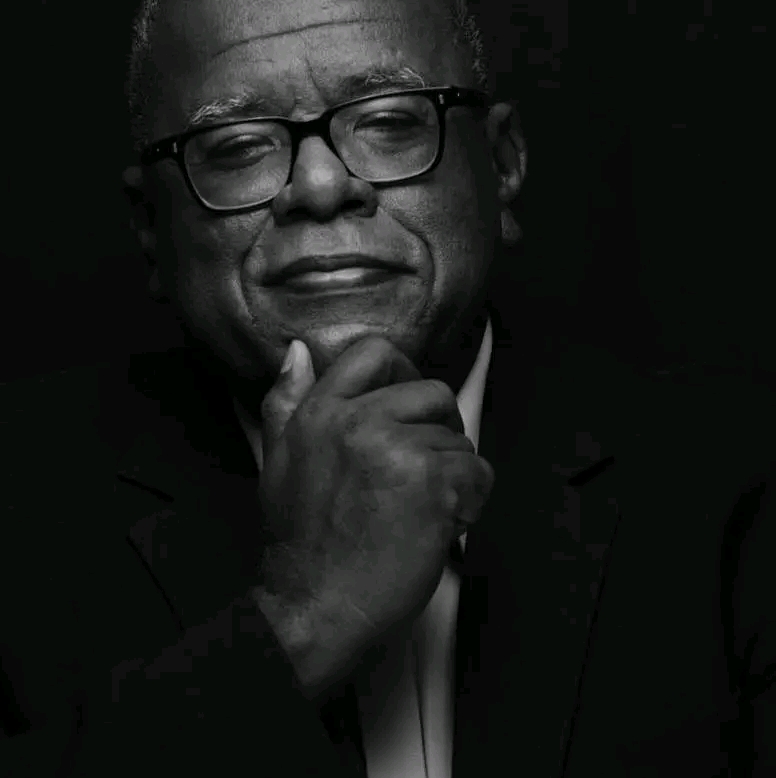
One of those who is not sold on the shift is Distinguished Professor of Education at Stellenbosch University, Johnathan Jansen. In a talk given to the Cape Town Press Club last month, Jansen’s misgivings are firstly drawn from the absence of ‘organizing logic, upfront, that states explicitly why is the change necessary, why now, and what is the theory of change (that is, how the change will unfold under ideal conditions).’
This absence, Jansen goes further, trivialises the selection or deselection of what will ultimately be included; is displeased that this selection rests on a history panel and calls it a ‘patriotic curriculum’ of the ruling party. ‘How else does one explain that Biko and Sobukwe are reduced to three mentions each and PW Botha eighteen mentions. Put differently, that while Biko and Sobukwe enjoyed prominence in the Grade 12 curriculum, they are now reduced to a mere two hours.’
Jansen appreciates no radicalism in the document, questions exactly which ‘African’ it speaks of; its ‘by-the-way’ references to non-black Africans; failure for a more critical study of slavery in the Cape; the focus on genocides committed by whites whilst ignoring those committed by Africans. In his characteristic wit and a pen dripping in both insight and sarcasm, Jansen basically puts a red cross through the document. He sees it as a failure on so many fronts; political, social and economic as well as a blindness to the interelationality of all history and events. His conclusion is that this entire curriculum exercise should be scrapped and started over lest it should go the way of OBE. But even he is well aware that politicians are generally not in the habit of considering constructive criticism, not even from the most esteemed academics.
Featured image: Distinguished Professor of Education at Stellenbosch University, Johnathan Jansen. Source: Facebook page.