
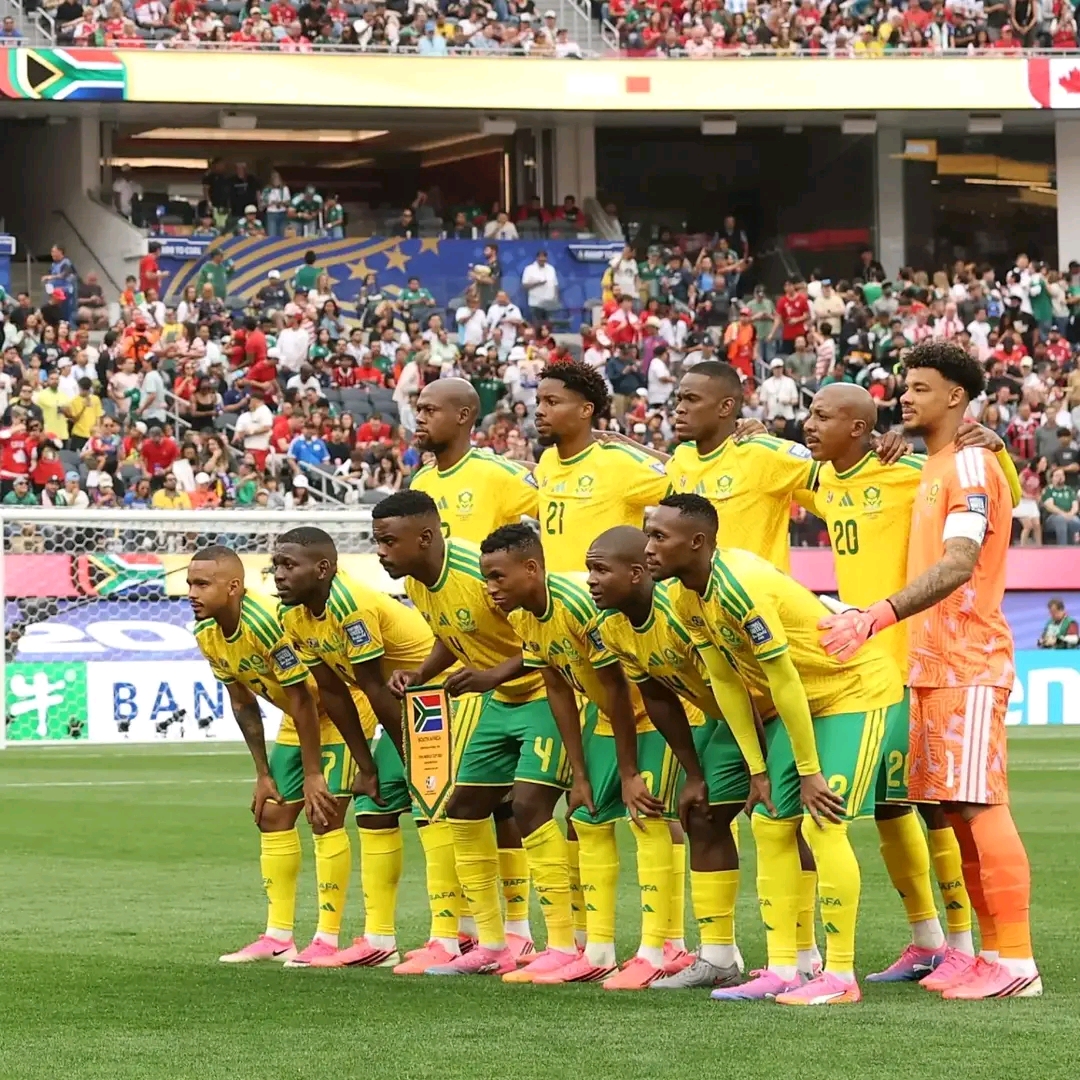
If I’d heard it from the friend who’d rolled by my place around 7 on the morning of Thursday, 25 June, I’d have called out his BS. Called him a bald-faced liar. But between obliging this unexpected, hungover visitor with a cigarette lighter, my timeline unusually began to act up. Rather than the usual mix of standup comedy, battle rap updates and global news snippets, Bafana Bafana had painted my feed green. For a moment the world, it seemed, was almost as stunned as I was. They were scratching their heads. SA had won 1 – 0 over the Republic of Korea, presented on the socials as a gang of nimble-footed tricksters who are put to the sort of training one would associate with an elite special forces platoon. And these raving unbelievers weren’t your local frontline Vuvuzela-toting fanatics.
Not your souped-up mining-hat-aficionado, either. ‘Bafana Bafana’ tripping of their mouths sounded a lot like I do when I pronounce the name ‘Jacques’ – laboured and giving too much of myself away. Buy-fha-nha Buyfahna. But with forks dripping in spaghetti, or under a fedora and chiffon at a Cafe a stone’s throw from the Vatican, or inside an adobe mud hut somewhere in Nairobi, someone somewhere in the world was trying to give their two cents on South Africa’s performance as some SAffers were still taking in the z’s.
Some of us were still sleeping. The world was tweeting. They were TikToking, dancing and sometimes throwing tantrums. We understood the mixed bag of feelings. There’s the matter of our government’s business at the Hague which has ruffled a lot of feathers and precariously placed us on the Trump administration’s black list. Then came the anti-immigration outbreak which made it inadvisable to name-drop South Africa even in the company of fellow Africans.
The back and forth between SA and other African leaders aside, the civilian fight spilled over on to social media where it effectively devolved into one pejorative meme, screaming match or straight-up hateful post after another. Prominent influencers and personalities from the diaspora came out to openly declare that, in this 2026 Fifa World Cup tournament, they would be putting their money on anyone but South Africa.
Most teams might not have had a leg to stand on amid such dislike, but this was South Africa. The little giant at the basement of the Mother Continent which for centuries has been in the habit of punching way above its weight. If nothing else, it still had enough slivers of soft power to maintain enough affection from some quarters as to not go into the competition as complete and shameful pariahs. It still had hordes of loyal fans breaking into amagwijo – a style of song that has penetrated the SA sports changing rooms into something that gives off Nguni traditional ceremony vibes even in rugby – through the streets of Mexico.
There was the Vuvuzela, forgotten by much of the world since its global debut on homesoil during the 2010 Soccer World Cup, now resurrected and nostalgically recalled by those who had been there to witness one of the most memorable tournaments of recent times, and the first in Africa. Restless late-night party-goers in clubs were blown away by SA’s second national anthem – the infectious Mgarimbe’s Sister Bethina and we watched them momentarily putting away the Samba and trying to get on in with the homegrown moves that go with the song.
It was against this vitriol, cheer and being regarded as the weakest country in Group A that the national squad took on co-hosts Mexico on Thursday, 11 June. With the opening ceremony – where SA’s creative talent was put on display at this world stage – still hovering in the air, the country would nonetheless go on to suffer a dispiriting 2 – 0 loss to El Tri in this curtain-raiser. Perhaps they had concluded that their adversaries were simply unbeatable as SA deployed a conservative (‘coward,’ some said) 5-3-2 formation and still went down badly.
A week later, they pulled off a much-needed one-all draw against Czechia when the Czechians had had Bafana on the backfoot from the start, drawing first blood in the sixth minute. The hard-won draw indicated that the boys were starting to shake off the nerves, we’re still hungry for glory, hence there was hope for us after all. Therefore SA’s star performance against the Republic of Korea greatly bolstered this narrative. None of the circulated high-intensity training videos we’d caught of the Koreans were going to help them against a Bafana squad that was starting to believe in itself. They didn’t. Bafana walked away victorious.
It was going beautifully and Canada, mostly famous for ice hockey and winter sports, seemed like the sort of opponent we needed to make light work of the glorious mission ahead. But a late goal – two minutes into injury time – by the Canadians put a sudden end to SA’s world cup ambitions. Bafana might have a reputation for letting the nation down when it matters most, yet there was something patriotic about getting behind the boys regardless. To bring something worth celebrating and being proud of amid everything else that is testing our collective faith in the country and its future. Although we fell short of experiencing such a moment of respite, those distinctly Mzansi moments of the Vuvuzela wailing, the braai and animal skins and people dancing to our music in foreign places may have been small in the bigger scheme but it was beautiful to watch. And to hold on to.
Featured image: Bafana Bafana line up for a picture session at the 2026 Fifa World Cup. Source: Bafana Bafana Facebook page.