
If nothing else, the recent unemployment statistics affirm, at least in the general perception, that the government – even in its current configuration – is way out of its depth when it comes to meaningful and sustainable job creation. With unemployment hovering above thirty percent over several years, at the very least, the powers that be appear woefully incapable of staving off the jobs bloodbath, let alone positively reversing them back to more acceptable levels.
Releasing the Quarter Labour Force Surveys (QLFS) data this Tuesday, StatsSA dealt the country a familiar blow. Some 345 000 people found themselves out of a job, taking the number of unemployed up to a staggering 8.5 million individuals in the second quarter of 2026 and bringing the official figure up to 33.6%. This number spikes even further when one includes ‘discouraged job-seekers, underemployed workers and the potential labour force … the composite underutilisation rate reaches 46,3%, meaning nearly half of South Africa’s extended labour force is not fully employed.’ Alongside the dropping workplace numbers during this period, SA was also experiencing a 329 000 spike in its labour force – new entrants that the market simply could not absorb. Unemployment and time-related underemployment increased to 36.6%.
As has consistently been the pattern for at least the past five years, the youth are the most affected, with the number of unemployeds between the ages of 15-34 rising by 1.5 percentage points to a total of 47.4%. More than anything, the latter figure isn’t so much indicative of a ‘cyclical dip’ rather an ‘entrenched structural failure in job creation.’ The industries in which much of the jobs bloodbath occurred were in community and social services, mining, agriculture and manufacturing.
For people’s confidence in the state’s capability to – at base level – function vaguely productively, this is an indictment and certainly does not augur well for those currently in power and who will soon be seeking to mobilise voter support towards the up-coming local government elections.
In fact, one could put forth that it is government’s very own programmes – often billed as an ‘income safety net and a pathway to valuable work experience that supports post-programme employability’ as well as ‘addressing poverty through structured, community-based engagements,’ on the state’s communications platforms. But in reality they are more like a double-edged sword, somewhat mirroring the general absence of the wherewithal to mend the deeper structural employment issues.
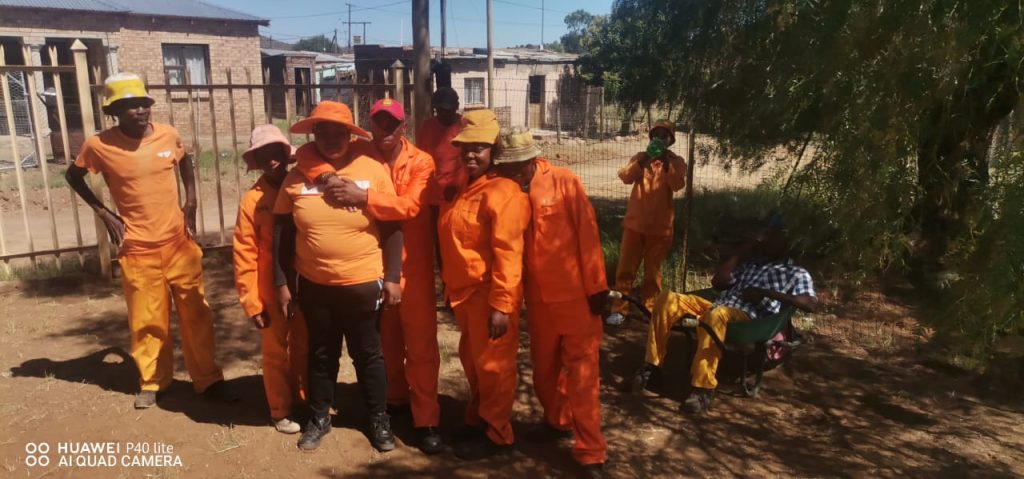
With more than 200 000 people ’employed’ in the Community Work Programme (CWP), for instance, the government’s flowery language does not match the grim experiences on the ground. The wages (around R1200 a month) in these programmes may be a buffer from complete starvation and poverty (and there may even be a few success stories in between) but beyond the groceries and keeping the lights on, they often do little else for these workers.
They are certainly not a gateway out of deep poverty especially to workers with families to support and they certainly do not absolve the state from plainly having long run out of sustainable long-term solutions. Pretty much like the swathes of graduate internship programmes, they are more for the optics: to create the illusion of employment and to keep those who are fresh out of varsity hopeful and optimistic. A quick Google search should show you that some of these programmes are not as much for job placements as they are another trough from which the connected liberally feed. If they were intended for the interns to acquire practical work experience, why do many of those who are enrolled in them find themselves jobless when the contracts expire only for the same internship to be carried out with new recruits?
Offering two days of work a week, programmes like the aforementioned CWP would then also no doubt contribute to the high ‘underemployment’ statistic. Moreover, they might even show a dubious side to government’s conduct. If the state is an advocate for minimum wage, by ensuring that these nearly a quarter of a million workers are capped at an 8-day working month, does that not give the impression that the state would rather keep them as ‘casual’ workers so as to avoid paying more? And, what message would this be sending to the ordinary businessman? With the local government elections in a few months, the terrain of job creation – or the perception that the campaigner is capable of creating them – may prove to be where much of the battle for power and electoral support will be won and lost.
With these latest figures showing that the Western Cape has the lowest rates of unemployment in the country, the Democratic Alliance (DA) will no doubt be drawing on this for future electioneering mileage. Already one writer has come out to try to explain how good governance attracts capital and investment which in turn leads to infrastructural development and job creation. His analogy seeks to contrast the massive disparity between the Western Cape’s low unemployment levels with the Eastern Cape’s extremely staggering numbers.
The rallying cry in the days preceding democracy right up until now, has been to ensure ‘dignified’ work for ‘our people.’ It was a firm favourite amongst politicians and trade unionists alike. Yet in the midst of glaring government failures, widespread corruption, unmitigated incompetence and a fractured, toothless labour movement, that entire schtik rings hollow. If anything, these quarterly surveys – bringing as they do these depressing figures – widen the gap between rhetoric and reality so broadly as to make the speech sound like a little more than a lie. For now though it seems that the guys who are capable of putting together a persuasive campaign around creating jobs and improving lives may emerge as a serious contender come 4th November.
Featured image: Community Work Programme workers in Colesberg. Source: eParkeni.