
Skits of unsuspecting black workers being randomly asked to produce a dompass, army trucks rolling into the neighbourhood and Rooi Rus-styled bearded white policemen – their German Shepherds gnarling on a leash. The DA had not yet pulled off its rattling electoral performance in the recent local government elections when social media creatives began stitching together such eerie content.
That, and warnings that Helen Zille’s first order of business when (not if) she had the City of Johannesburg mayoral chain dangling from her neck would be to cut off all illegal electricity connections throughout Soweto’s townships. And, for possibly the first time in some of their lives, actually force residents to start paying the emperor, or in this case, the madam. No more free lunches. Kiss goodbye the days of greasing the palm of a greedy City Power official to look the other way. Gog’Zille is coming to town and it’s not big enough for her and corruption, was the message. It also came with a caveat: It’s what you wanted, right?
Zille, the ether creatives estimated, was both on a warpath to do away with misgorvenance as well as being on a special mission to do in Jozi what has succeeded in making Cape Town a relentless contender to the title of ‘most beautiful city in the world’ for several consecutive years.
That’s what everybody wants, right? That’s why they voted. To see a cleaner, lawful and corruption-free South Africa and Joburgh. Potholes filled, hijacked buildings restored, water gushing from the taps, and fewer of those individuals that hand out pamphlets that promise safe late terminations and cures to erectile dysfunction and bad mojo. An aside: said pamphlets distributors know no immigration status; they are just a euphemism for criminals and scammers.
In the moments since images of the Results Operations Centre began beaming onto phones and televisions, three names began to do the rounds: LGE2026, DA and Helen Zille. At the time of writing, the numbers had been trickling through sufficiently enough to paint a picture. Yet the far bigger story, the one that seemed to capture the interest of the TikTokratti was what these meant to the local political scene, the country’s future and to you and me.
Both seasoned as well as two-bit analysts took full advantage of the opportunity and began flooding the algorithm. On any other day, it would’ve been the ANC at the center of the commentary. Today, though, they were the first princess. The queen of the moment, Zille, was the talk of the town and it was from her that the ‘clippers’ were scouring the net hoping to find a clip where she has said something off-ish. Her initial statements pertaining to shacks and people from Joburgh wanting jobs went viral.
Adored, mistrusted and downright despised all in one breath, she was the one wearing the tiara and so the only thing everybody could do was speculate from afar or listen to what ideas and policies she had that would save the children, protect the poor and ensure that the City of Gold lives up to the moniker.
The polls, which had forecast that the ANC would be dropping to the low thirties appear to have been spot-on. They had said that although the DA would not exactly be a majority winner, it would certainly be the biggest, and in the process would embarass the ANC by snatching critical metros and wreak havoc on the party’s long-standing strongholds. These are now unfolding in real time, carving a new political landscape that has had the chattering class scrambling to try and make sense of it for their followers.
With the doubts whether the DA could indeed pull off a major upset now a foregone conclusion, attention soon shifted to what life under the DA could mean as early as 2029. The accusations of the DA being a white party, although still a hot topic, featured almost as prominently to the party being seen as a pro-Israel, pro-market, anti-redress, anti-BRICS and whether indeed it could truly be a vessel of hope for the black poor.
Citing its performance in the Western Cape, those who voted DA often mentioned that it was just the logical thing to do. Unemployment in that province is the lowest in the country, municipalities there have the best audits and the ANC had been dilly dallying around the issue of job creation and people had waited long enough. There were also those who wanted to experience some schadenfreude at the ANC’s misfortunes.
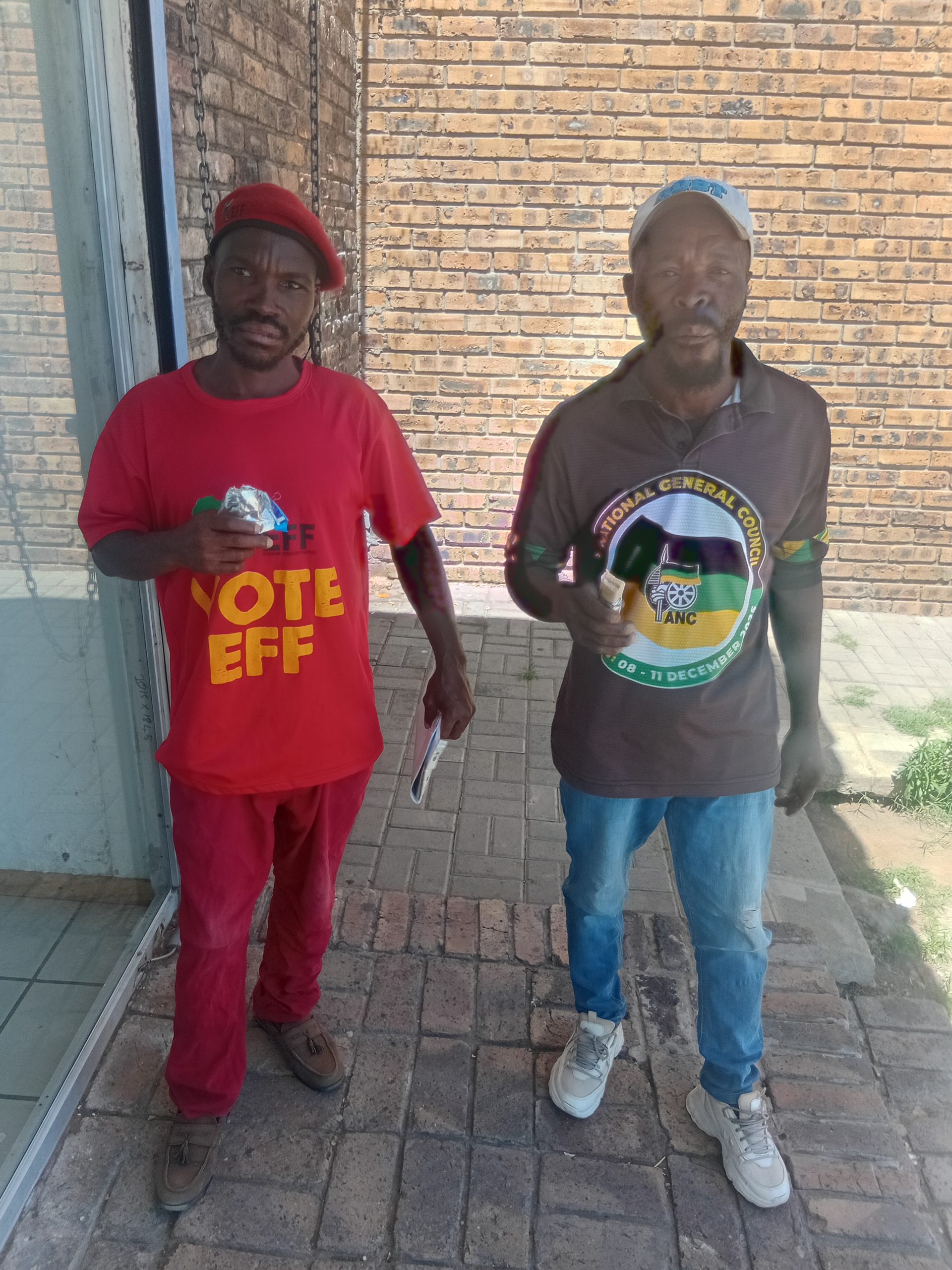
Indeed, even in the small Umsobomvu Municipality in Colesberg, it looked like opposition parties – the EFF in particular -were set on making the local ANC pay dearly. On the social media squabbles ‘oohlohl’esakhe’ was a common term to denote politicians who were supposedly only concerned with ‘stuffing themselves’ gluttonously and hence needed to be dislodged.
Although the conversation here was around giving everybody access to opportunity, it essentially did not waiver too far off from the politics of perceived white versus black. Yes, change was necessary but it seemed that the people would not be voting outside of the ‘colour bar’ to attain it. Ward 3 (out of a total of 7), for instance was clinched by Luvuyo Tyindyi, an Umsobomvu Residents Association (URA) candidate in 2021 and has been reclaimed by the ANC’s Zoleka Ntombana despite formidable contention from Mbuyiselo Manzi, an EFF candidate. Ward 5 was also URA territory in 2021 but has now been taken back by the ANC.
The ANC has won all the municipality’s wards and enjoys a majority of nine out of 13 Council seats. Although the Patriotic Alliance (PA) – in line with national sentiment – was touted as the party that would attract the Coloured vote, they and the DA managed to score only one seat each and the EFF bagged two. Meanwhile, it seems that URA is non- and its people have gone on to find a home within the EFF. In fact, as early as this year February, former ANC individuals who’d deflected to URA had allegedly returned to the ANC as announced by the Northern Cape Premier Dr Zamani Saul at the party’s 114th provincial celebrations in Colesberg in February of this year.
The national vote may have experimented with looking outside of the usual patterns, here it seems old traditions persisted and refused to budge. Perhaps the only exception came in the form of the two EFF seats which like their predecessor, URA, represent a small but unshakable resolve to seek something other than ANC hegemony. That the SA Communist Party could barely scrape together a single percentage of the vote suggests that even here, nothing is permanent. Amakomanisi used to wield some social capital in earlier years. Their songs spoke to the working class struggle and captured the sentiments of the downtrodden but here we are now and the voters don’t seem to remember them enough to make their mark next to their candidates.