
’14-year-old arrested after domestic worker allegedly shot dead in Barbeton.’ Typically, such a headline would achieve exactly what headlines are crafted towards: getting people to click and read. It might’ve even read impactfully enough as to elicit sympathy for the deceased. And, given his age, maybe raise a conversation as to why someone as young as the alleged perpetrator could commit such a hideous act? Sadly, not in South Africa’s most candid barometer of the prevailing sentiment: social media.
This headline, it seems, was missing three essential ingredients: ‘farm,’ ‘black’ and ‘white.’ There simply had to be a bigger context to a teenager picking up a shotgun and firing it especially because the incident took place on a farm and his target happened to be black. For those who either wished to refute or propagate the idea of racially-motivated farm murders, they were always going to ensure that this is exactly the conspiratorial and embellished theme the story would take.
They had all the hpothetical yellocake to drop their racialized bombs onto the perpetually charged web and watch the smoke rise across the platforms. From there, the usual would occur: all attention diverted from the 51-year-old woman, shot and killed by a child who likely spent his toddler years sound asleep, strapped to her back. Who ate the food she prepared and called her by a nickname.
The tragedy of both families was gone, obliterated under a thick cloud of vitriol amongst people who – even with the painful facts at hand – simply could not appreciate the sadness of the story. A dead woman and the child who lost his innocence by pulling the trigger and taking a life. Except (not unless I was reading different articles) by the time the first comments started popping up, there had been nothing said of either individual’s race. The only concrete facts that had fuelled the firestorm were the victim’s occupation and the agrarian venue. There were no person’s names mentioned.
Such is the grotesque reality of SA, 32 years in democracy, still divided even in the basest of humanity and totally incapable of seeing the other even in their moment of grief and misfortune. Unable to bring themselves to mourn simply because another life has been cut short or to wish the perpetrator’s family strength in their own despair. Not too long ago, Donovan Marx became an internet hero. After allegedly enduring a vicious attack at the hands of five ‘black’ men – who even cut off his ears – he walked out of hospital to the sound of Afrikaans gospel songs from people who clearly were there to remind him that he wasn’t alone.
It was a powerful moment. It was also a controversial one: on the one hand he embodied the resilience that is often associated with the farming community who are flung to a brutal territory that is harsh to tame and on the other, he was seen as just another scapegoat to the myth of a white genocide being carried out on the nation’s farms. Indeed, the incident, particularly its gruesome nature, has cast the spotlight back on the issue of farm murders.
Yet, rather than unbiased discourse surrounding such incidents, the common knee-jerk is to resort to finger-pointing and the usual, racial positions. It is always befuddling how these opportunities to hear each other out always degenerate into whataboutisms instead of a sincerity to understand where the other might be coming from.
Unlike Marx, and knowing X’s (previously Twitter’s) outstanding sleuths, one has not seen a gofundme initiative or a decent outpouring for the victim’s family, instead the conversation has turned on how Afriforum is all of a sudden quiet when the perpetrator of farm violence is (supposedly) white. Or why the black people are up in arms when the boy has yet to be tried. It’s at times like these that the socials give one a sinking feeling.
In fact, one has been yawing through such an experience since the recent elections. Sure, the entire race-centred analysis has always come with the voting territory. But throw enough of it in there alongside the bloodshed of women dying from shotgun wounds and men having their ears sliced off and logging in can get slightly overwhelming to say the least.
Yet, seemingly the workaday social media engager appears to have a special appetite for such topics and is more than finger-happy to drive them home with an insult or a crude meme. I’d always figured that these were largerly inspired by major, triggering incidents. Let’s say an openly racist video shot on some Mediterranean beach by a white South African who just couldn’t stop himself from expressing how there were no ‘K’s’ anywhere near him. Now, anything from opining on sport to food could get you nailed.
The social media comments section has become what the braai, the political meeting, church and even the dinner table of yesteryear were: places where people freely ventilate their deepest prejudices and hate. Then, just as long as there was no eavesdropping ears to hear you, you’d get away with it. Now, all you need is the enabling power of a burner account or pseudonym and you can just go wild. Whether it is the K-word, or the body or slutshaming. (The k-word in this case could be the old-school derogatory reference to African people, or the seemingly casual – but no less insulting – ‘kwerekwere’ that has been thriving especially as a result of the March and March stormtroopers.
No amount of burnout on my part could ever turn the rabid online racist from their ways. But one can always dream and hope that in the face of death, anguish and the misfortune of others, that the natural, human response would be at the very least towards the people hardest hit by it. Anything less than that not only flies against all cultural norms but it does tell us a great deal about the heartless, incompassionate barbarians we all are regressing back to.
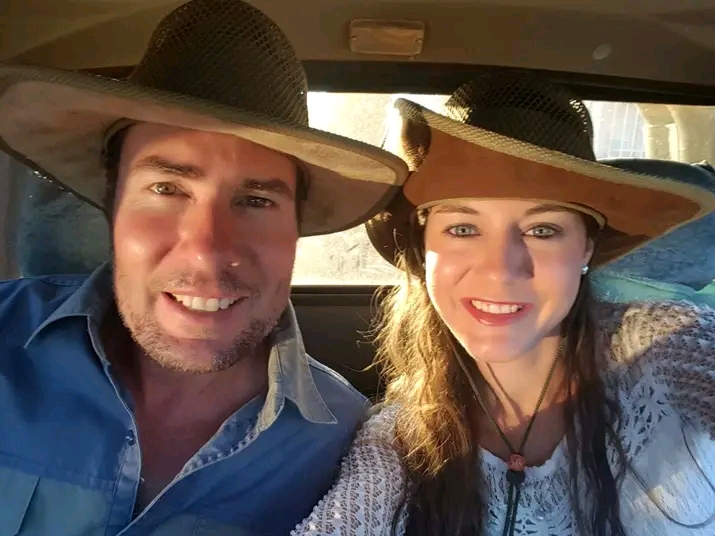
Featured Image: Farm attack survivor Donovan Marx and his wife, Louise. Source: Facebook.