
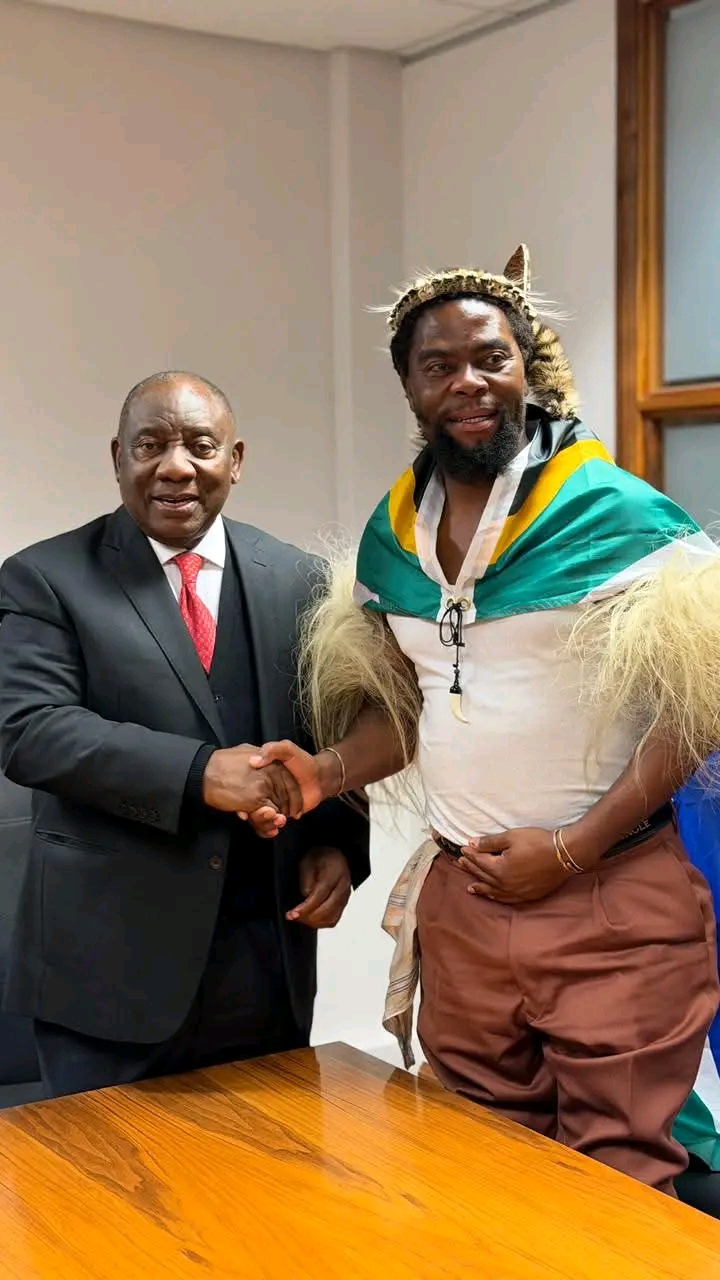
The massive show of support for March and March as well as like-minded “dudula” groups were mind-blowing to witness as they unfolded on the ground. But if one takes stock of the fact that on the eve of the much-vaunted shutdown, President Cyril Ramaphosa met with only two of the prominent figures – Nkosikhona Ndabandaba and Ngizwe Mchunu – leaving Jacinta Ngobese-Zuma discovering of the meeting the same way the rest of us did – via social media – immediately raised a lot of questions.
Had she been sidelined on doubtlessly the singularly most important occasion of her activism? Had Ramaphosa’s silver tongue effortlessly sweet-talked the hypermasculine duo into singing a different tune altogether. Almost overnight, Ndabandaba abandoned the bare chest for a suit and tie, started calling formal press briefings where he outlined some of the things his organisation would be embarking on statesman-like fashion.
That said, the swarming protests leading up to the day of reckoning were unlike anything South Africa has experienced post-Apartheid. The buildup was alarming enough to have President Cyril Ramaphosa calling a family meeting on 7 June, with the acting Police Minister Firoz Cachalia recently announcing that his planned special operation would cost taxpayers around R600million and then in a surprise last-minute move, the president meeting up with the aforementioned individuals. On this minute-to-midnight handshaking Mondli Makhanda, former editor-at-large at City Press writes:
‘It was an extraordinary development where these microwaved leaders gained access to the nation’s seat of power and were given legitimacy by the highest office in the land.’ By most accounts, Makhanya’s words echo those of thousands who had woken up to video snippets of the encounter on 30 June. Makhanya’s continues: ‘Had [Ramaphosa] chosen to maintain the stance of not engaging with the ragtag army and then see the country blow up, there would have been a lot of blowback against his arrogance and detachment.’
‘But in buckling and letting the vandals into the inner sanctum, Ramaphosa inadvertently conceded that the government was dealing with a powerful force that was usurping its own role. This was a hugely symbolic moment. That was a major victory for them and by the time 30 June dawned they had a bounce in their step.’
It then shouldn’t surprise anyone that at a media briefing Ndabandaba felt emboldened enough to state that one of his organisation’s first steps would be – in collaboration with municipalities – to identify hijacked buildings and to ensure that the occupiers are asked to leave.
Although both Mchunu and Ndabandaba had been somewhat sketchy on whether violence might occur on the go-home day, what was clear is that they commanded unprecedented support and the president’s folding to meet with them would’ve spoken to their perceived influence and invincibility.
And whatever assurances the duo would’ve given in as far as their followers adhering to the nation’s laws, it was evident that this would’ve been out of their hands to entirely ensure. The marches and attendant effects had flared up all across the country. The turnout was staggering and combined with people’s passions would’ve been impossible to control. But to great relief, the majority of the marches unfolded with little or no major incident.
But there were reports of protesters taking the law into their own hands in Germiston. According to etv News, these individuals forced their way onto private property, evicted people who could not immediately produce their immigration papers and handed them over to police. Countless videos have surfaced of people being harassed. Daily Maverick also reported extensive looting at Durban’s KwaDabeka township. Some 900 nationwide arrests had been made of illegal foreigners, looters, participants in public violence and those harbouring illegal immigrants, according to Puleng Dimpane, the acting National Police Commissioner.
In Alexandra, 21-year-old Siphesihle Mncemeleni, was reportedly shot dead amid violence and looting that took place in that township. Looting and violence were also reported at Ekurhuleni.
As for Ngobese-Zuma, her message to her followers was that until their demands are met (read: illegal foreign nationals have left), her organisation must continue to march every week. She looked visibly upset – answering in stern-faced ‘no’s’ when a journalist asked her whether she’d been informed prior to Ramaphosa’s meeting with her collaborators. Ndabandaba has wildly claimed that some 2 million foreign nationals had left the country because of his group’s endeavours, however, these numbers could not be verified.
With the world’s glare fixed on how the state would respond to the situation, Ramaphosa was placed in an inenviable position. There sprung up social media commentary around a sudden swarming of bots using the hashtag #Habahambe. It was pretty clear that the world’s eyes were on South Africa, sworn enemies amongst them, monitoring the situation and SA’s response to it. That international pressure aside, there was also the specter of a Marikana 2.0 haunting the president from within. Have the mob running amok and the state would look as incapacitated as it did during the 2021 July riots. Respond brutally to the uprising and there’d be accusations on how this supposedly moral country cannot itself practice what it preaches to the rest of the world.
With the local government elections to take place later this year, the events of June 30, could drastically see a paradigm shift in voting patterns. On a single ticket, – that of anti-immigration – previously obscure figures have been catapulted to unbelievable heights. Day in and out they have drawn swathes of people onto the streets. Even the most established political parties nowadays struggle to get this right on a public holiday. They practically have to drive out to their followers just to get them to vote. Now, imagine if this troika were to do a U-turn – take back previous statements of them not wishing to enter politics and register as a political party. Now wouldn’t that be throwing a spanner in the works?
Featured image: Nkosikhona Ndabandaba meets with President Cyril Ramaphosa on the eve of the June 30 shutdown. Source: Nkosiikhona Phakel’umthakathi Ndabandaba Facebook page.