
In an unprecedented move, the National Treasury has decided to withhold billions in equitable share transfers to 70 municipalities citing financial mismanagement and non-compliance with the Municipal Finance Management Act (MFMA). Despite attempts at training and offering support, the abuse of state coffers has gone on unabated hence Finance Minister Enoch Godongwana has finally dropped the gauntlet.
‘[Municipalities]’ said Godongwana at a media briefing, ‘are the custodians of community welfare, the engines of local economies, and the guardians of social stability, as such, the financial conduct of municipalities has far reaching socio-economic importance.’ In what he described as an ‘extraordinary but necessary’ decision, the Minister expressed that it was not intended to be punitive but corrective.
Despite persistent government interventions, municipalities continued to:
- Adopt unfunded budgets;
- Accumulate Unauthorised, Irregular, Fruitless and Wasteful Expenditure (UIFWE);
- Fail to meet statutory obligations to Eskom, water boards, SARS, the Auditor-General, and pension funds.
The upshot of this has therefore resulted in:
- Since 2021–22, municipalities have incurred R24.12 billion in fruitless and wasteful expenditure.
- They have accumulated R145.21 billion in irregular expenditure, with R40.14 billion in 2024–25 alone.
- They have disclosed R118.13 billion in unauthorised expenditure, more than half of which was on non-cash budget items.
- Budget credibility has deteriorated: in 2024–25, 116 municipalities, nearly half, adopted unfunded budgets.
- By year-end, municipalities owed R3.40 billion in interest to Eskom and R1.21 billion to water boards, while 48 municipalities had overdue third-party deductions.
These measures not only affect a few metros like Mangaung and Buffalo City but smaller municipalities including Colesberg’s own Umsobomvu. Umsobomvu has since released a statement explaining that after working ‘diligently with the National Treasury and to address all matters that had been raised regarding compliance with the provisions of the Municipal Finance Management Act,’ the Treasury had released the municipality’s equitable share allocation.
The response from pundits has generally been to ask, ‘why did it have to take so long?’ As previously written, many of the country’s municipalities have been clocking horrendous audits year on year without consequence or accountability, effectively entrenching a culture of impunity and treating state funds as a bottomless feeding trough for the connected. The message was unequivocal: here, you could casually dabble in all manner of financial mismanagement (read: corruption) and not only get away with it but enjoy a very brazen kind of self-enrichment where you do not need to sleep with one eye open.
Writing in the Daily Maverick , former City Press Editor-at-large, Mondli Makhanya mentions the case of Lindiwe Msengana-Ndlela, a seasoned public servant roped in to clean up the embattled Nelson Mandela Bay (NMB) municipality in the 2010s. Her commitment to fighting corruption and how she sought to reverse the systemic rot and malpractice within the municipality would ultimately see her pushed out of her municipal manager role.
Party politics and avarice seemed to override the cardinal responsibility of faithfully serving the people of the metro. In Msengana-Ndlela’s litigation against NMB and despite costly attempts to stall the judicial process, the municipality would end up not even refuting her allegations whatsoever. It therefore should not surprise anyone that in response to Treasury’s decision it has been NMB – which at R30-billion, has the highest rate of wasteful spending in the entire country, this combined ‘with its low collection rate and high unauthorised, irregular, fruitless and wasteful expenditure,’ that has been amongst the first to complain.
Similar examples are everywhere, some of the most scandalous currently being laid bare to an incredulous audience at the Madlanga Commission. It is terrible, if not utterly shameful, to watch just how deeply and normalised the misgovernance and incompetence has become. The testimonies put forth by individuals who have been put in charge of vast sums of public money has been a wake-up call for South Africans to seriously think about who they will be voting for in the upcoming local government elections.
Eastern Cape Premier Oscar Mabuyane this week held a meeting with six mayors whose municipalities have had their equitable shares withheld to present their action plans in this regard. ‘As the provincial government,’ said Mabuyane, ‘we cannot allow a situation where our people bear the consequences of governance and compliance shortcomings through disruptions in basic service delivery.’
Of course, the stinging irony here is that the residents of Buffalo City, for example, have been squirming under woeful governance and pitiful service delivery for years, as Parliament’s Standing Committee on Public Accounts has been hearing. The Economic Freedom Fighters (EFF) have been amongst those who regard Treasury’s decision as potentially grave for service delivery. Although the party accepts that ‘our municipalities have either collapsed or are on the brink of collapse, with service delivery breaking down and basic infrastructure left to decay’ they maintain that ‘the solution is not to withhold monies that must deliver services to our people. Municipalities have failed our people, and now the National Treasury is doing the same.’
Although one agrees that this argument of collective punishment is somewhat sensible, it, however, fails to address the elephant in the room which is, how to ensure that municipalities do their job and see to it that there are consequences when they don’t. This is one of those instances where a hard decision must be taken, if for nothing else, to show those who would seek to unashamedly plunder state resources that big brother is watching.
All across South Africa, we see municipalities collapsing, critical infrastructure ripped apart and once glorious towns sliding to decrepitude. RDP houses go unfinished, facilities go unused, things fall apart in full glare of municipalities and the public often is left with nothing to do except complain on social media or on ineffectual platforms like this one. Perhaps ‘the lowly newspaper man’ Mondli Makhanya expressed it best: ‘It was the state of emergency that South Africa’s local government system has long needed. An ice-cold bucket of water that a family matriarch throws at a hungover husband or son to force them to wake up and go to work.’
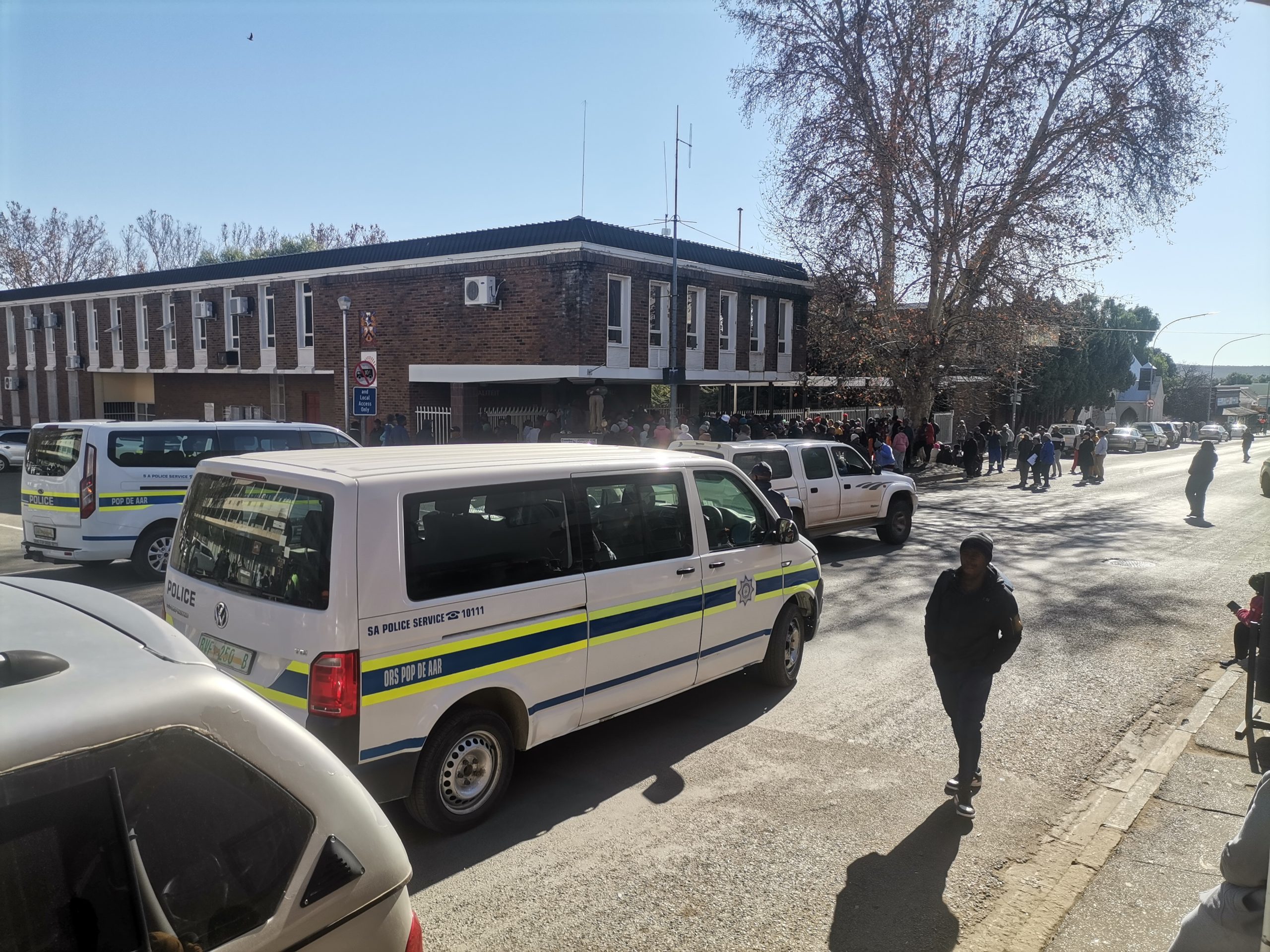
Featured image: Colesberg’s Umsobomvu Municipality. Source: eParkeni.