
The Constitutional Court’s finding on May 8 that the National Assembly had erred in its rejection of the Section 89 panel report into the Phala Phala saga has thrown a spanner into the works. For the ANC – which had misused its parliamentary majority to effect the rejection – the judgment has set in motion a backfooted effort that smacks more like limping towards damage control than a convincing PR strategy to rally around the president.
The apex court rulings have a way of doing this. In 2016 the court threw a similar curveball when it found that former president Jacob Zuma had broken his oath of office in light of upgrades made at his private homestead in Nkandla. When the Mail & Guardian’s Mandy Rossouw first broke what would later be dubbed Nkandlagate in 2009, a political fightback to protect Zuma immediately ensued. Despite increasingly mounting evidence of malfeasance in the revamp, ‘the sweat brigade’ lied, insulted and did whatever they could to rally around their political principal, write Adriaan Basson and Pieter du Toit in their book, Enemy of the People.
‘We call them this,’ the book reads, ‘because frantic perspiration was often the order of the day when these gentlemen had to defend the indefensible in public or Parliament.’ During this saga, the Office of the Public Protector was undermined; a dubious public works report was cooked up; Cabinet ministers straight-up lied; there were coverups and witch hunts to punish underlings or to find scapegoats. The message was clear – everything and everyone was collateral in the defence of Zuma, including the Constitution.
By November 2013, the Ministers Thulas Nxesi (public works), Nathi Mthethwa (police), Nosiviwe Mapisa-Nqakula (defence) Siyabonga Cwele (state security) had approached the North Gauteng High Court for an interdict to stop Public Protector, Thuli Madonsela’s provisional report on Nkandla. Attempts were made by various high-ranking officials to pressure her into dropping her investigation. She refused, and these ministers would later withdraw their interdict application before it had been heard in court.
On 19 March 2014, Madonsela released Secure in Comfort, the 447-page report that, overnight, made her both a darling and a fiend. ‘On the evening it was published’ write Basson et al, ‘government’s fightback plan … kicked into action when [Jeff] Radebe addressed a press conference to rubbish her findings.’
In a 20-page report to Parliament on 14 August 2014, Zuma basically stated that ‘his newly-appointed police minister, Nathi Nhleko, had to decide whether he was liable for any contribution to the Nkandla costs.’ The decision to expect someone from his own Cabinet to determine this ‘set in motion the EFF’s’ Pay back the money’ campaign against Zuma.’ Eventually a parliamentary ad hoc committee constituted of only (because parties were unable to agree on processes to be followed) ANC MPs ‘ended up clearing Zuma of any wrongdoing and criticising Madonsela.’
‘They slammed her for making findings about security when she wasn’t a security expert and said only the Constitutional Court had the authority to decide whether Zuma had contravened sections of the Constitution.’ More cringe moments were to come, like when Nhleko delivered his findings around whether Zuma should pay back the money. ‘Nhleko sweated buckets as he explained that the swimming pool at Nkandla was really a fire pool for firefighting and thus a security feature’ amongst a host of other embarrassing justifications.
These long-drawn tactics would ultimately come with a surprising twist when the ConCourt granted the EFF access in the party’s application that Zuma tell the country when exactly he intended to pay back the money. ‘A week before the matter was scheduled before the Constitutional Court, Zuma capitulated.’ He finally agreed to pay back a portion of the money leaving those who’d shielded him livid. Ultimately, the court found that not only had Zuma failed to uphold, respect and defend the Constitution but the National Assembly’s ‘resolution based on the minister’s (Nhleko’s) findings exonerating the president from liability is inconsistent with the Constitution and unlawful.’
With the resurgence of ‘farmgate’ following the ConCourt’s 8 May ruling, SA finds itself faced with yet another long-winded presidential scandal. It began on 1 June 2022 when former State Security Agency head Arthur Fraser laid criminal charges against Cyril Ramaphosa of allegedly covering up a theft of over $4 million (now said to be around $580 000) which had taken place at the president’s Phala Phala farm.
Athough the presidency conceded to the robbery, it denied any criminal wrongdoing. Within a week, opposition parties were either querying whether the money had been declared or calling for Ramaphosa’s resignation. On 8 June, Public Protector Busisiwe Mkhwebane announced she would be investigating the matter, the following day Ramaphosa suspended her.
The following months would see a reluctance on the part of Ramaphosa to answer questions in the National Assembly and a reluctance on Parliament to act decisively on the matter. In September Speaker Nosiviwe Mapisa-Nqakula then appointed an independent panel which on 30 November concluded that the president may have violated the Executive Ethics Code. On 6 December the ANC used its Parliamentary majority to shoot down an impeachment inquiry.
In June 2023 the acting Public Protector Kholeka Gcaleka cleared Ramaphosa, followed by the SA Reserve Bank in August. In February the following year, the EFF filed papers to the ConCourt challenging the National Assembly’s blocking of an impeachment process. They have since been vindicated by the 8 May judgment in which the court found Rule 1291 – which Parliament had relied on to eschew the impeachment process – was invalid and unconstitutional.
Although this has been one of those exasperating episodes where there was a group effort to deny South Africans some transparency and where political muscle was flexed to avoid accountability, Phala Phala, like Nkandla, offered a window into the workings of our society. One was able to peer into the gore, see the bad guys, and the good ones and realise there are plenty of both on either side. There were lessons about men and women who do right for right’s sake and those who act in the opposite because they have other horrible people to follow them down the wide and crooked. This was meant to be one story but during the research, one came upon so much hypocrisy, so many agents of deceit who are now playing victim and blaming everyone else but themselves. The ruling has suddenly brought them out on podcasts, in new and old tweets. Let’s meet them in Part 2.
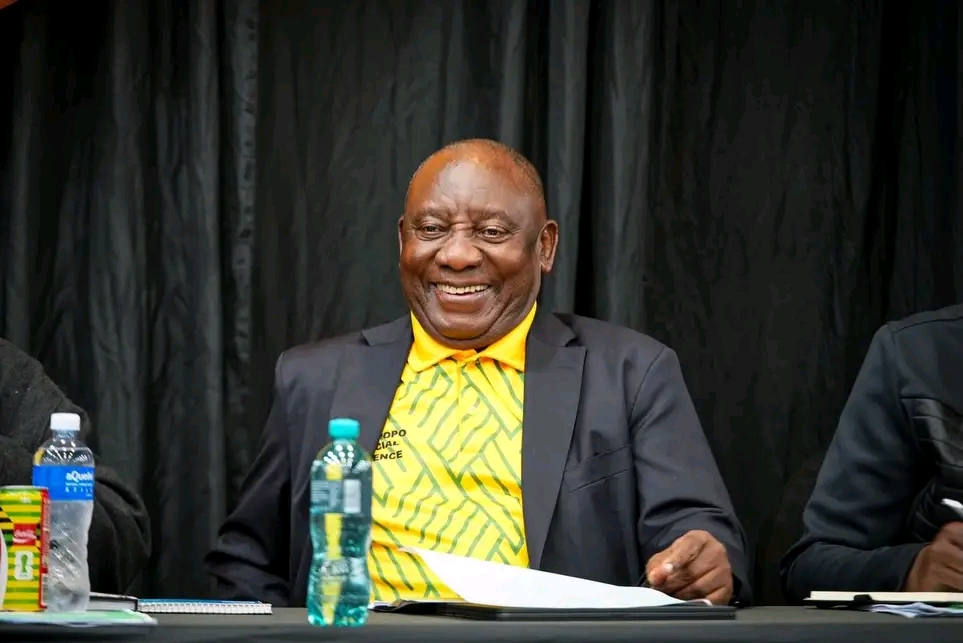
Featured image: President Cyril Ramaphosa on a visit to Nelson Mandela Bay earlier this month. Source: MyANC.