
This week the Economic Freedom Fighters (EFF) announced that they would be seeking to have registration fees paid to various councils like the HPCSA and SACE by unemployed professionals scrapped. In a letter to the Portfolio Committee on Higher Education and Training, EFF MP Sihle Lonzi ‘submitted a formal request to Parliament for urgent intervention on annual professional registration fees’ in regard to ‘how fees charged by statutory bodies prevent unemployed young professionals from maintaining their registration status.’
A little over a year ago, Lonzi found himself at the forefront of a proposed Student Debt Relief Bill aimed at easing the financial burden on students. This draft Bill would allow students to ‘apply to the fund to have their university debt paid off if they pass their academics, allowing them to graduate or receive their qualifications.’
At the time, the chairperson of the parliamentary higher education and training committee, Walter Letsie, told reporters that it was too soon for such a law. Letsie’s rebuff ironically came at a time where year on year university campuses were engulfed in sporadic, often violent student protest; when the NSFAS was – and continues – to be in the grip of serious graft; and grating unemployment even amongst graduates.
It also came a decade after the #FeesMustFall, one of the most incendiary student actions of the post-democratic era. That rebellion would rattle the corridors of power and even though it first started out as an isolated incident at the University of Witwatersrand, the fires and toi-tois soon flared up on campuses across the country. Not only did it attract massive media attention, force government to take the issues raised seriously but it also led to ‘the missing middle’ being coined in the local education lexicon.
Although one of the nodal gripes of the unrest was around free education for those who couldn’t afford it, the solidarity with #RhodesMustFall meant that some of the wording was so radical that it would’ve had frumpy university heads unsure as to what had hit them. The use of the hashtag (#) as well as the effective online dissemination and mobilising suggested that in the hands of the born-frees, technology was not just a tool towards academic proficiency, it could also be used to burn institutions to the ground.
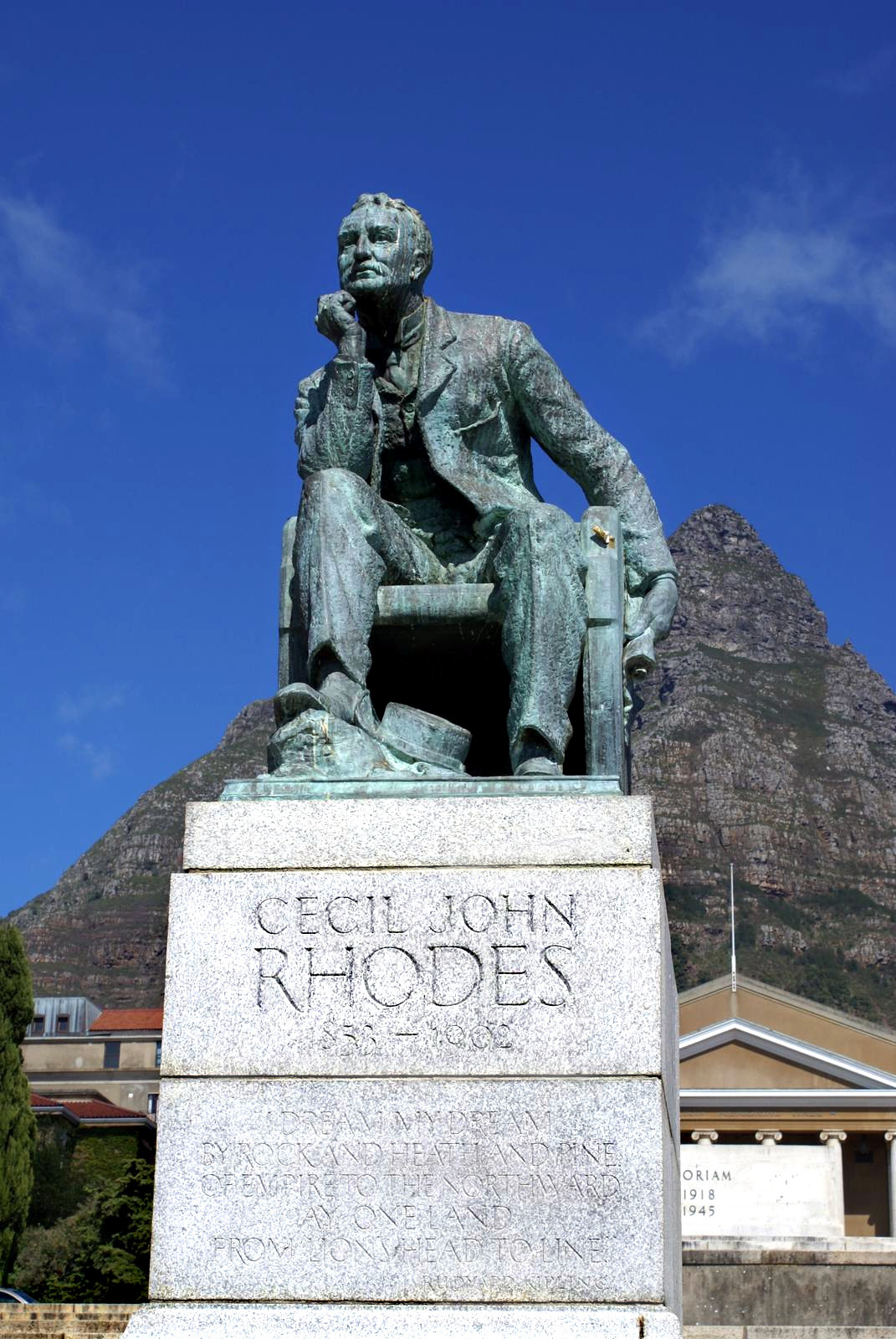
The #FeesMustFall association with #RhodesMustFall (collectively known as the Fallist Movement) which was immortalised by a UCT student who threw faeces at the statue of Cecil John Rhodes thus making it pretty clear that the proverbial had hit the fan and – in the parlance of the youngsters – ‘s**t had just got real’ a few months earlier, the bedlam ensued. In this maelstrom, university leadership found themselves inundated with calls against fee increases, assistance to poor learners, the clearing of previous student debt as well as to remove all symbols of colonialism and apartheid and the ‘decolonising’ of the curriculum.
The demands had gone far beyond a mere clarion call for universal access to education and were now steadily chipping away at the very institutional history and identity of these universities, majority of which were built with the English or Afrikaner student in mind. Furthermore, the Fallists also attempted to gain broader public appeal by taking on wider structural socio-economic and racial inequality matters.
During this time, various prominent organisations and individuals including the ruling ANC government, however, were not impressed. Late former president F. W. de Klerk expressed in a letter to The Times that even though Rhodes had been an architect of the Anglo-Boer War, the National Party government had never ‘thought of removing his name from our history.’ Education experts as well as the liberal media maintained a dim view to the movement but it was arguably education minister Blade Nzimande’s utterances that led to the EFF’s increasing popularity in the higher education space.
Not only did the party leader ingratiate himself with the students during the early days of the Fallist effort by being amongst the first to voice his full support, he also urged for the release of those who had been arrested, even visiting them in prison. It is with this small history in mind as well as the upcoming local government elections that the EFF’s proposed scrapping of the aforementioned fees comes into sharp focus.
Increasingly, the ANC finds itself accused of having long distanced itself from society’s immediate problems. The unemployed who haven’t yet given up looking for work tell disheartening stories of how expensive job-seeking has become. Internet cafes, printouts of CV’s, copies of qualifications, transport and the like all come with difficult costs for those without a source of income. The complaints grow louder when the position applied for is alleged to have been a deployment gig, and advertising the post was a mere formality by the particular department and a waste of time for the unwitting applicants. As I write, a petition is circulating on Facebook against government’s disqualification to certain posts for those who are above the age of 35. The comments highlight how this seemingly does not take into account one’s years in post-matric education, previous work as well as to ask the question: ‘if a 35-plus-year-old cannot apply for public employment, why doesn’t the disability grant then not include those who are 36 years and above?’ This hindrance, goes the argument, on a capable person, is as good as living with a disability.
The EFF’s announcement to challenge these fees may have not made headlines but to those unemployed graduates and professionals, it doubtlessly struck a chord. It goes without saying that delivering on the textbook promises of piped water and proper sanitation to communities without is very important. But for the EFF to come up with a move that is not conventionally part of the promises package is a breath of fresh air for those who have kept the faith and still look forward to a chance of dignified employment.
Featured image: The now removed statue of Cecil John Rhodes at the University of Cape Town. Source: Wikipedia; Danie van der Werwe.