
It’s Day 45 of my ’emergency’ situation but still about another two weeks away from an appointment with an orthopedic specialist. Only then will they decide whether to operate on my leg but it’s hard to hold one’s breath. Not when Spotlight’s reporting has been painting an unoptimistic and gloomy picture of a severe backlog in the Northern Cape’s surgery waiting list.
In May 2023 the number stood at just under 4000 the MEC for Health Maruping Lekwene told the provincial legislature. By the time the 2023/2024 quartely surveys were released the figure had sharply shot up to around 6 373 cases, more than a 50% increase from that of May. By July of this year the National Council of Provinces 2025 Oversight Visit report on the status of healthcare services in the Northern Cape reported that an estimated 7 906 patients were on the province’s surgical waiting list.
Around the same period, the SABC reported of a ‘years-long wait’ for surgery at Robert Mangaliso Sobukwe hospital (RMS), the province’s only tertiary hospital. The health department attributed the backlog to a shortage of specialized theater staff which they said was a scarce skill in the province. In an effort to turn around the increasing backlog and at a fee of R400 000 a month, the province procured the assistance of a Gauteng-based Medicomed to ‘assist with orthopaedic surgeries on a month-to-month basis.’ Non-profit organisations like Gift of the Givers and Project Flamingo have also stepped up to assist.
One doctor’s testimony according to Spotlight spoke of patients who had been hospitalized for more than 18 months awaiting hip replacement surgery and others waiting for five years for a cataract procedure. Lulu Mxekezo, Northern Cape Department of Health Spokesperson, suggests that the remedy to minimise the problem would be the operationalisation of theatres in district hospitals with specialised theatre staff.
He feels specifically that the prioritising of Harry Surtie Hospital in Upington as well as De Aar hospital could greatly reduce the burdens currently placed on RMS. However, as things currently stand and despite the aforementioned remedial efforts, the numbers continue to climb, there remains a severe shortage of specialized staff and only four out of RMS’s nine theatres are operational. All of the country’s nine provinces all show some form of backlog.
A personal perspective
A word that repeatedly popped up with familiarity whilst researching this article is ‘delays.’ It very aptly captured one’s experiences into the burrows of the public health care rabbit hole. Despite the injury or affliction, you soon learn that in order to keep yourself from going mad, you must learn very quickly to be very patient. This is not lahnee private health care paid for from your own pocket but it’s a service availed to you by the roughly eight million of the nation’s taxpayers.
On paper it’s meant to be a free-for-all equal opportunity swinging door. But in practice it is more like a turnstile. The numbers, age and severity of the illness of your fellow queuers will determine how quickly and effectively you will be worked through the process. The stories say it might be today, a year from now or never – one never really knows what ‘delay’ or ‘rescheduling’ might tamper with your journey along the way.
Of course, the basic comforts should never be sneezed at. Primary health care with painkillers, a meal and a bed to rest on are privileges not to be taken lightly when one sees the grim stories that are sometimes posted by frustrated patients on social media. But, you will often find that it is less a matter of staff not being the most helpful or compassionate than it is of them often being hamstrung by institutional realities.
Delayed communication with far-off consultants, medication running out, staff shortages which in turn lead to burnout and being overworked. In that maelstrom, there are patients, some of whom might be incontinent and totally reliant on staff which do not make things any easier. ‘Staff are in a difficult position, says Professor Robert Dunn, a consultant spine and orthopaedic surgeon affiliated to the University of Cape Town and Groote Schuur Hospital, ‘as we are forced to care for all who present, irrespective of time or resource availability. We are under tremendous theatre access pressure, which leads to compromise. It destroys staff morale when they do their best in an overburdened system and then are criticised for doing their best. This has been termed ‘moral injury,’’ he notes. Then of course the elephant in the room: the large scale graft that has affected Thembisa and Baragwanath hospital, to mention the most widely-reported.
In all of this comes the human cost of it all to the lives of vulnerable South Africans. The inability to gain access to immediate surgery can have dire consequences for patients. Spotlight reports that ‘waiting times for orthopaedic surgery, which often are not life-threatening emergencies yet can have a profound impact on people’s quality of life and mobility, ranged from a few days to over five years in some provinces.’ The waiting time in some cases went up to a decade and according to Head of the Department of Orthopaedic Surgery at Tygerberg Hospital, Professor Jacques du Toit, given the current burdens on the country’s health care system as well as societal realities, this number is bound to only increase.
Even amongst low to middle income countries (LMICs) Sub-Saharan Africa has it the worst when it comes to breast cancer (the most common form of cancer) as well and the country also shows a backlog in this form of surgery. Best thing one can do under the circumstances is to take to heart the counsel of the musos: hope for the best but expect the worst. I can assure you that there’s someone, somewhere in the country who had a far worse experience and lived to tell all about it.
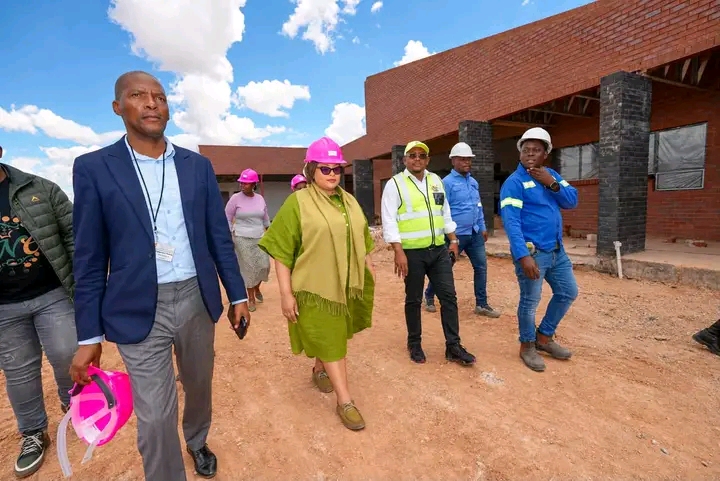
Featured image: Northern Cape health MEC Nontobeko Vilakazi on an oversight visit in the John Taolo Gaetsewe District.