
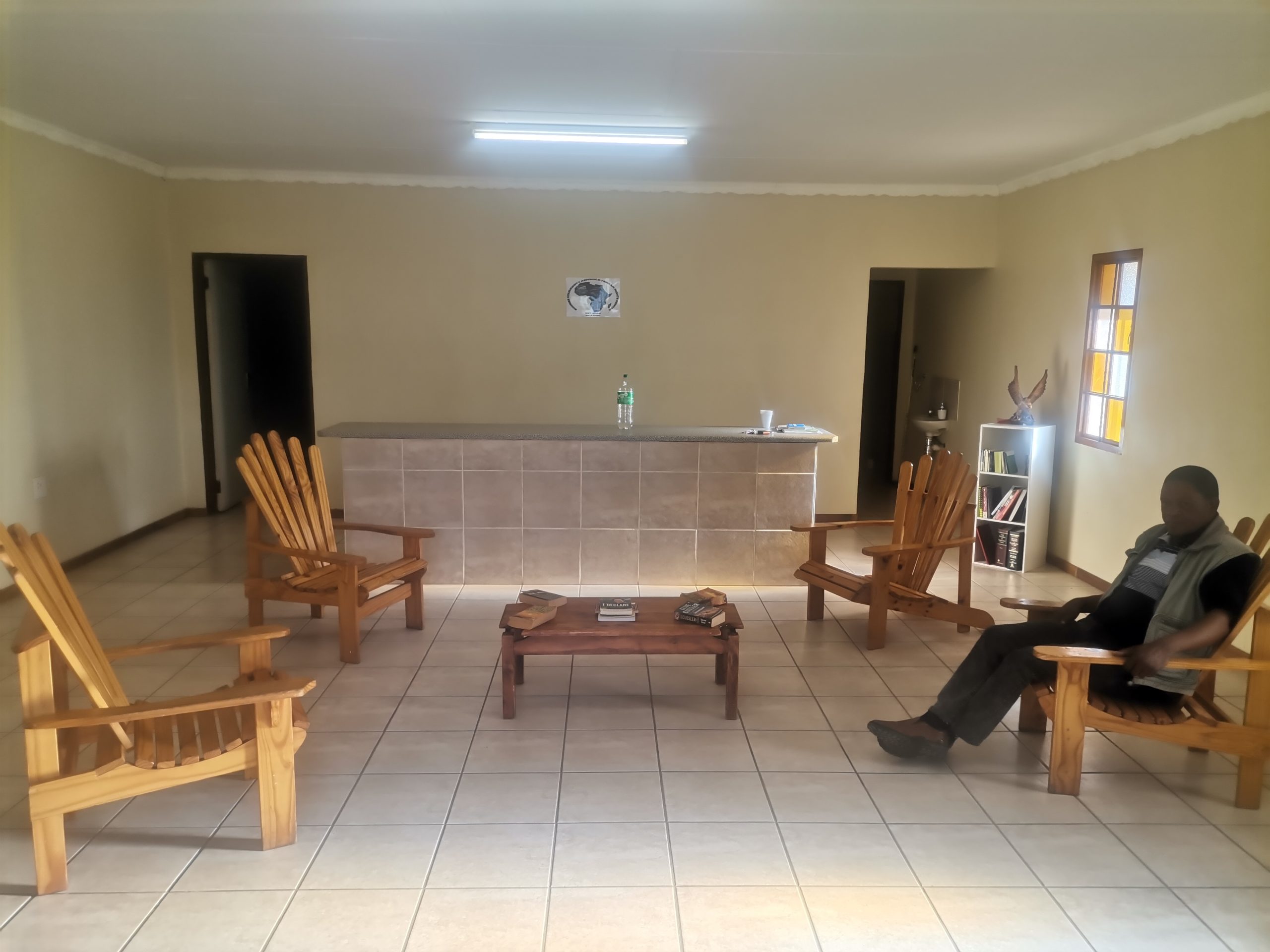
The Sunrise Community Advice & Human Rights Centre office on Kuyasa’s main road is ordinary and unassuming only inasfar as the few books that adorn the shelves, the four low-hung wooden chairs and the modest wages drawn from a personal savings account. Two weeks old, almost everything is either a hand me down or a charitable donation from someone who probably couldn’t wait to part with it. This includes the paperback fiction novels splayed out on the second-hand coffee table.
The sprightly admin staff are fresh out of some studying. The founders – an advocate, a former freelance journo, and an ex councilor with something of a bullish reputation – could hardly come with a more contrasting backstory.
Now, however, they find themselves bound by common purpose, one that straddles an intersect between past injustice, its present consequences and what justice might look like if it was accessible to the illiterate messelaar or the group of petrol attendants who were allegedly sacked without so much as undergoing a fair process. The man who lost a few fingers whilst operating a machine at work. The woman claiming sexual harassment on the shop floor. Complaints of low wages in the spaza industry.
Such is the nature of cases with which the office says the community has already entrusted them. The response to their endeavour has been overwhelming, taken them completely by surprise according to co-founder Lulamile Banjwa. When at the outset they had been diffident in their aspirations, concentrating primarily on labour-related concerns, it is the community, he says, which has forced their hand into drastically broadening their scope.
Now they find themselves sifting through third-party cases, estate disputes, public health care negligence, and the one – as fellow co-founder Johannes Williams says – that might just land them on the wrong side of the establishment – municipality tariffs. This is where Williams comes into sharp focus.
As a former EFF councilor in what is an ANC-run municipality, he is well aware that he may not be the most popular bloke in town. In his former role, he was a carbon copy of the sort of bellicose outrage for which his party is well-renowned anywhere it has a presence, including Parliament. Difficult to rein in and ‘ungovernable,’ he is often remembered as the guy who never backed down or the trouble stirrer, depending on which side of the Council chambers you were sitting. His ability to mobilise meant that he was often particularly insufferable, both within the municipality and the business community. (He is one of the people who organized last year’s march on the Umsobomvu Municipality in protest of the billing system.)

However, it is not the haardegat temper that would see him booted out of Council but failure to honour party levies. Yet instead of quietly slinking away from the political limelight, Williams found himself in the dock, facing charges (he says) of incitement to violence. He tells us that he was merely trying to challenge illegal practices in the spaza industry but the court saw it differently, slapping him with a five-year sentence of which he served 10 months.
Saying he has seen the error of his ways, he is still adamant that change is impossible if the community does not demand it head on. As far as he’s concerned rates and levies at the local Umsobomvu Municipality are nothing but a scam that defies even the prescripts outlined in the Local Government: Municipal Property Rates Act No. 6 of 2004 and Regulations. This is his guiding document and he has made it a personal mission to challenge how the municipality bills residents, this time through the arduous legal channel. He couldn’t quite get it right during his stint in Council, but now with the legal Centre, he believes anything is possible.
In many ways the new office is a throwback to the Karoo Law Clinic, a place that once offered legal assistance to the masses in the early 90’s. Started by local lawyer Antony Osler, it assembled together a team of former political activists, taking on cases of exploitation and subjugation of the underclass during the transition years from legal discrimination into the dawn of democracy. This is why the Sunrise founders’ first pilgrimage was to drive out to the farm Poplar Grove to personally seek out Osler’s blessing, counsel and whatever else the legal doyenne might be able to provide.
The long-term vision, however, – if we are to take Mbanjwa at his word – is so ambitious in scope and idealism it impels one to wonder if these guys have not perhaps taken on more they can chew. Passion and enthusiasm alone have their limitations and can only get one so far. And – without funding – probably not very far at all. That the team are punctilious and dogged is a good start but do they have enough momentum and resilience to bite the bullet and hold out when the hard times come?
Well, we need only look at how they’ve already hit the ground running, says Mbanjwa. With next to nothing in their pockets and only dreams swirling in their heads, they have an office, people are coming in and there are networks being formed in Johannesburg and Bloemfontein as a start. There’s also positive feedback from at least one university. It’s not much, he admits, but it does say a lot about their personal commitment. For the ordinary townsfolk who are often too financially hamstrung to access legal services, they will be crossing fingers that this new project will indeed eventually live up to its promises.
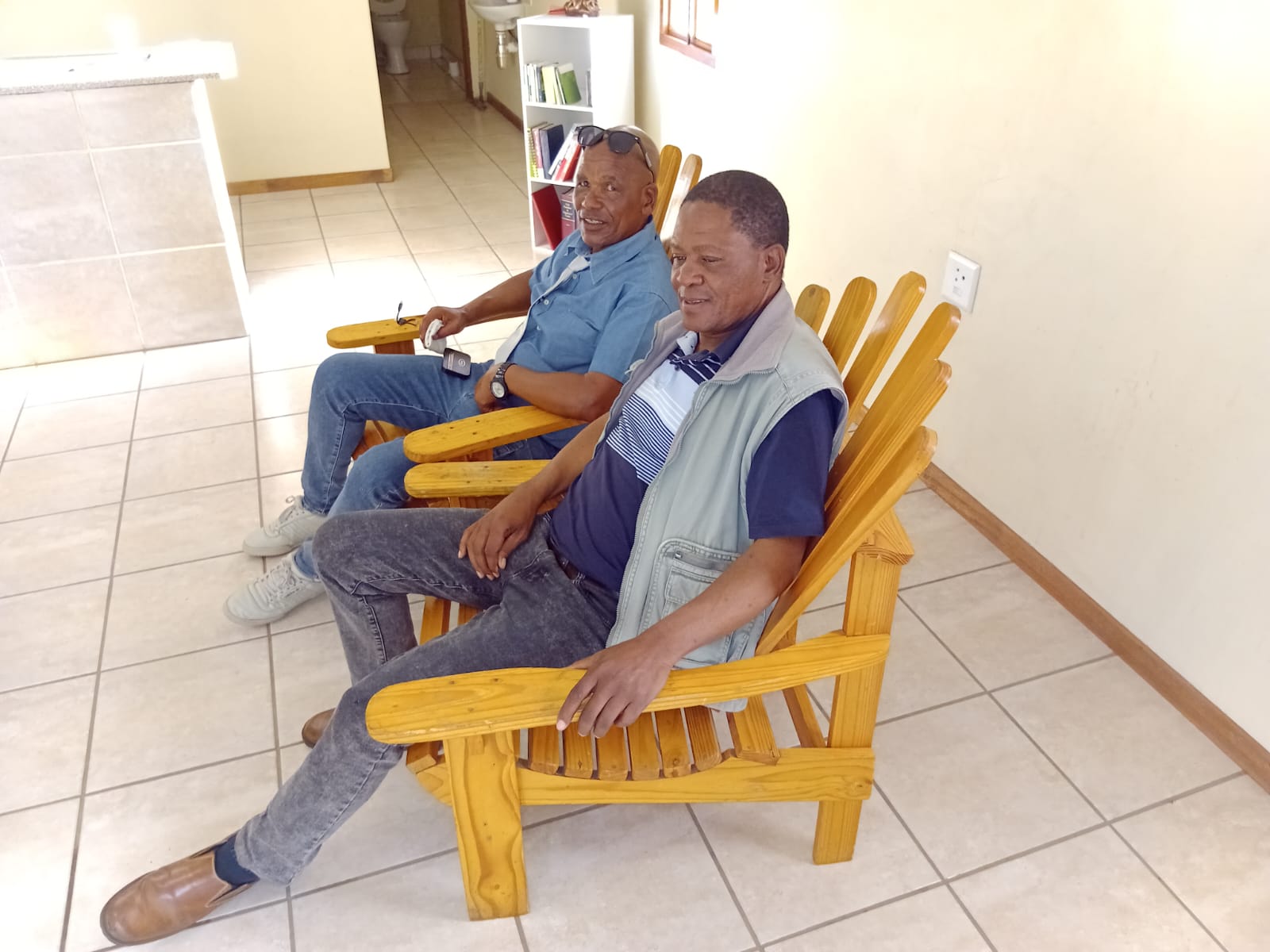
Featured image: Lulamile Mbanjwa and Johannes Williams at the Sunrise Community Advice & Human Rights Centre offices in Colesberg. Source: Supplied.
Ntate Williams
You are one of a kind
Thank you for Eparkeni
Thank you Dimakatso.