
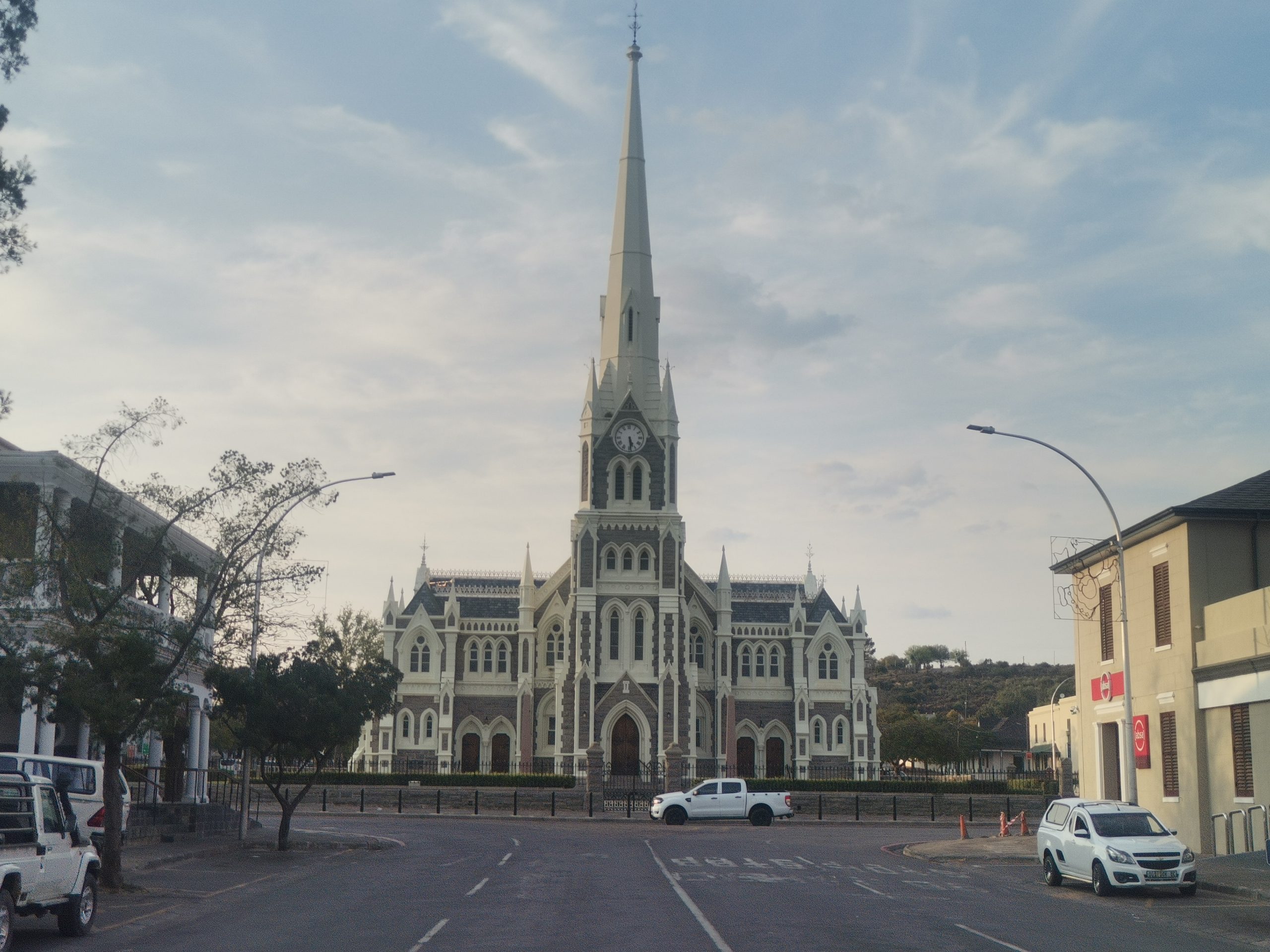
When on 6 February, Sports Arts and Culture minister Gayton McKenzie approved that Graaff-Reinet would thenceforth be named Robert Sobukwe Town in honour of the political activist and Pan-African Congress leader and founder, he had poked the badger.
The town immediately exploded into a frenzy, culminating in tensions, protests, and a seething impasse that has gratuitously played itself out on the socials and took a very serious tone on the evening of Wednesday 18 March when Sobukwe’s grave was desecrated. Images of the vandalism were virally shared and by the following morning a criminal case was opened with the police.
Beset by a plethora of hurdles, the path towards the name change announcement has been sullied by all manner of disagreement and has spawned various resistance bodies who have deployed various efforts to counter the decision. McKenzie had barely signed-off on the renaming when the Freedom Front Plus come forth to outrightly reject the proposed new name and urging residents to do so too.
On a heated SABC’s The Full View debate the party leader Dr Corne Mulder referred to the matter as a familiar pre-election gimmick used ‘to try and hide the incompetence of different local governments who couldn’t deliver services to the people.’ His problem, he went on, was not Mr Sobukwe rather the many important, relevant towns who are in the crosshairs of the proposed renamings.
‘At the moment, we have very limited resources in South Africa and instead of doing service delivery, instead of getting the infrastructure going and creating jobs we are trying to have this kind of tokenism which I don’t think takes anything further,’ Mulder said. To him, this is also a concerted effort at the erasure of Afrikaner culture. His opponent, PAC Secretary-General Apa Pooe saw it differently. To him the change ‘will bring about inclusion … historic justice.’ As a reminder of the nation’s painful past, said Pooe, colonial names must simply be done away with, less as ‘an erasure of history but … a correction of history.’
To Mulder, the town holds significant historical importance to Afrikaners, it being a known starting point in the Great Trek and in his mind there is simply no constructive justification for the name change. Pooe then retorted: ‘Our Afrikan country should reflect who we are, should reflect what we stand for. It cannot continue to honour people who subjected us to dominance, people who subjected us to oppression. It’s a painful reminder to us as Africans when we see these names continuing to be in our streets, in our towns. The history of this country must reflect African heroes … those who stood for the truth … for a struggle against colonialism.’
Asks the host whether any colonial or apartheid-era names should stay? No, emphatically responds Pooe. Mulder goes on to quote the ANC’s Freedom Charter which declares that the country is for all who live in it, black and white. So then, if ‘something belongs to Afrikaners and the other communities, they should also have a say. You cannot just force things on other communities.’ Therefore, Mulder says, even if the change goes ahead, they will not accept it. They will continue to speak of Graaff-Reinet whilst Pooe responded that to co-exist with people who don’t seem to recognize that transformation is a constitutional objective would be difficult. The television debate thus mirrored the realities taking place on the ground.
A survey done in December 2023 only fueled the sentiment that the name change did not sufficiently consider the feeling on the ground. It found that 83.6% (92.9% of them Coloured, 98.5% White and 55% Black) were not in favour. This has subsequently prompted local lawyer, Derek Light, to pen a letter of complaint to McKenzie to reverse the decision citing that legal processes had not been properly followed.
Named after Cornelis Jacob van de Graff, the Dutch governor of the Cape Colony at the time of the town’s founding in 1786 and his wife Hester Cornelia Reynet, it is the country’s fourth oldest town. It is also where the iconic Sobukwe was born and is now buried. Currently, it is a battleground of a frequent SA tussle. At least 1500 placenames have been changed between 2000 and 2024, many of them resulting in similar protests and raising the same questions around whose history it is anyway.
Given the insignificance of indigenous nomenclature or historical figures on the country’s topography, the SA map is largely a reflection of its colonial and apartheid history. Therefore, name changes – particularly when they substitute previous overlords with Struggle-era leaders – are often perceived less an effort at transformation than an assault on minority culture and history. Amongst a host of others, they almost always come with racial undertones and the case of Graaff-Reinet is no different.
On the one hand there is the obvious individual frustration from businesses who are now forced to fork out large sums towards rebranding. Then there are those who will question the prioritizing of a costly renaming exercise whilst the town is plagued by issues of service delivery. Given how these things tend to go, suspicious questions will also arise as to where the big renaming tender will go.
Most importantly, though, are the deeper questions around history, heritage, culture and so forth. As we’ve seen in places like Gqeberha (formerly Port Elizabeth), on the one hand, there is the worry that the new democratic dispensation has it in for minority (read: white) history and seeks to decimate it from memory. Proponents, however, are adamant that this is less an attack on minority culture than a hope to realize restorative justice.
In the case of Graaff-Reinet, though, with a big Coloured population, there has been a third voice. In at least one article, one gentleman has reiterated how, to him, the old name has brought about some economic benefits. According to one Laughton Hoffman, the Coloured voice remains ignored in the current dispensation. Even if one were to dismiss the findings of the 2023 survey and call Hoffman’s case an isolated remark, do his comments not raise a helpful question? Next time, should the communities not be adequately allowed a say in who their own heroes are?
Featured image: The iconic NG Kerk in Graaff-Reinet. Source: eParkeni.