

Over the past week my social media timeline has led one to believe that in the upcoming local government elections (LGE) the City of Johannesburg will be where the gloves come off and there’ll likely be blood on the floor. Whilst elsewhere the canvassing mostly creeps up subliminally in the form of potholes being fixed, streets being swept, but no actual boots-on-the-ground campaigning, in Jozi the barnstorming – and acrimonious beefing – is off the starting blocks. This is clearly the one that everybody wants. But why this city, a notorious heartbeat of crass capitalism, illegal migrants and hijacked buildings?
The answer will always depend on who you ask and it skirts somewhere along the themes of a showbiz mecca, an economic powerhouse, no culture, big sedans, sewer-strewn slums and too many broken dreams. This concrete jungle known as eRhawutini wears many hats. In the semi-rural upbringing of two generations before me, it served a cautionary tale.
A warning to the chaste bluegrass black maiden in her frock, demurely boarding a coal train in search of work, not to gaze too fondly into the eyes of her new-found city-slicker lover. The one who dabbles in cigars, wears heavy-soled Flosham ‘basements’ (shoes), imbibes the good stuff and speaks with an accent from 70s Hollywood. He’s no good, to her or himself, and eGoli euphemistically known as ‘kwandonga ziyaduma‘ – place where the walls thunder – and ‘kwanyama ayipheli kuphel’ amazinyo wendoda‘ – where the meat never runs out, only the man’s teeth – the one who’s not too careful might find herself chewed up and spat out like tasteless gum. In those backwater parables, she usually winds up dishonouring her father’s name as a good-time slum girl whose replaced the dignified long dresses for tight jeans and mini skirts.
This is a place where dreams were made, sometimes down a mineshaft, sometimes in a classroom, the theatre, strumming a guitar on the pavement but mostly they died in the kitchen or garden of suburban servitude. Grim articles of a city wincing out its swansong – potholes, dry taps, power outages and the City of Gold slowly degenerating into lawlessness stand against this electioneering backdrop.
Few places enjoy the sort of multicultural sentimental attachment that transcends boundaries quite like Joburgh. ‘New York of Africa’ raps Tumi ‘Stogie T’ Molekane. Hillbrow is often referred to as Little Lagos in light of the hordes of Nigerians who have come to call the place home. Unlike the nation’s other cities where one cultural group prominently dominates, this is the meltingpot brought to life by disparate cultures converging in large numbers for bread or pleasure even if it means using a gun to get their hands on either. For the most part East London or Gqeberha are patently Xhosa, Durban is Zulu but Jozi is a cocktail. And now, some warn, it is slowly going to seed, brought low by a toxic mix of misgovernance, criminal syndicates, pitiful service delivery and a host of other iniquities. Today, more than ever, the city needs a hero.
Hence the early campaigning clearly indicates that those who would seek to run things there are well aware that the stakes are staggering. Victory could be a stepping stone for the winner to take it all in future. Anyone who is able to turn the fortunes of Africa’s richest city could potentially gain massive public confidence in their perceived ability to rescue the rest of SA from tumbling over the edge.
With such aspirations in mind, it is unsurprising that the DA and ActionSA have timeously brought out theit finest to vie for the city’s top job. Joburghers have had it with crackpot mayors and the ANC, which hasn’t yet declared their candidate appears hamstrung. Their incumbent mayor Dada Morero seemed nothing but a Ramaphosa-anointed shoo-in than a practical man with the wherewithal to effectively tackle the glaring issues, not least of which were the water shortages. So the party might well play their hand cautiously by crafting a campaign around the organisation itself than any one individual.
Despite all the controversy around his remarks on illegal immigrants, Herman Mashaba is doubling down, employing an unapologetically stern tone in this regard on recent interviews. This is all clearly well-calculated and deliberate. The chattering class may have crucified him for the utterances in the past but Mashaba’s schtick is quite apparently tailored around the raw sentiments on the ground. Amongst many ordinary South Africans, the ‘foreigner problem’ is immediate and goes hand in glove with spazas selling expired goods, counterfeit liquor and drugs on the street.
Not for nothing that start-ups like Operation Dudula and March and March draw tremendous support overnight. Their seeming hands-on approach of actually confronting spaza and liquor traders as well as suspected druglords finds resonance with an audience that has come to normalize unaccountability and delayed policing and court processes. This explains why Mashaba brought in drug-busting television host Xolani Khumalo as his party’s mayoral candidate for Ekurhuleni. The constituency is wary of promises and to live up to the ‘action’ part of the party’s name would surely to pay off handsomely.
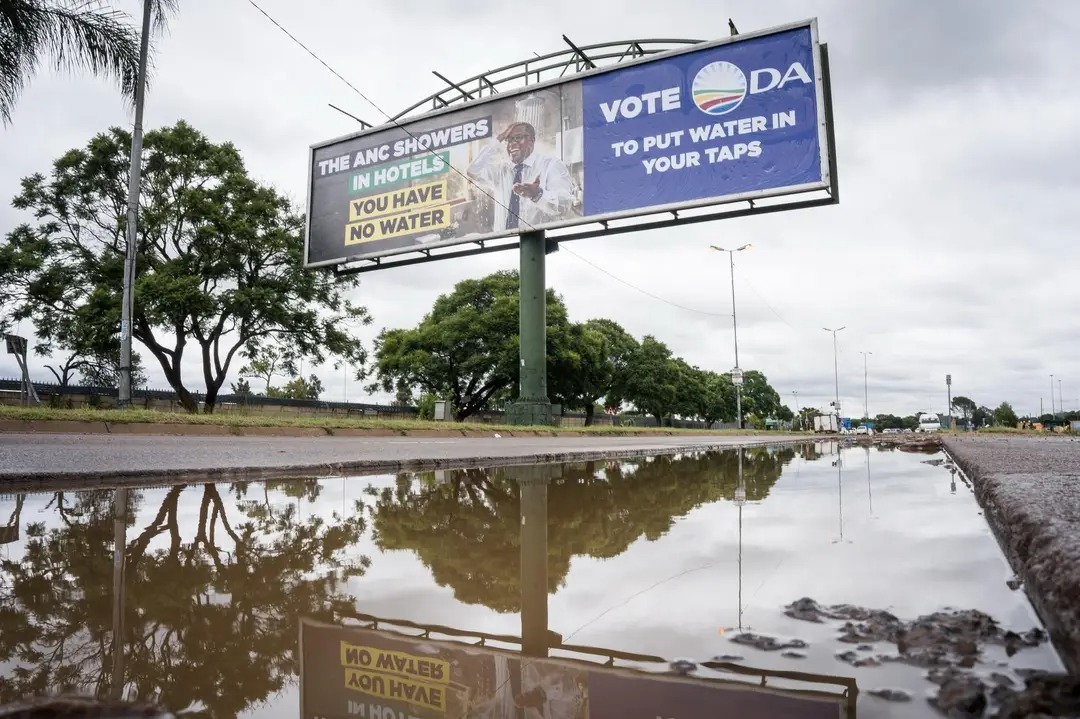
As for the DA’s Helen Zille, it’s been a penetrative, sometimes casual, sometimes bureaucratic, with obvious designs at woeing the black vote. The party’s meme-like billboard in the wake of Gauteng Premier Panyaza Lesufi’s embarrassing comments about being forced to shower in hotels due to the water problem has had the socials laughing out loud (lol). We’ve seen her out supporting the Buccaneers, dumpie in hand and fans all around. She’s taken to speaking isiXhosa and has promised 200 000 jobs.
Insofar as presence and optics go, the DA appears to be leading the pack. The MK Party which performed well in the 2024 national election doesn’t appear to be all that eager to show up just yet. A homeboy who’s had a previous stint as mayor, Mashaba starts off on an advantaged footing. His business acumen as a self-made multi-millionaire also does not harm his efforts. That said, there are those who will speak of ethnic lines being the major determinant of how people will eventually vote. But one wonders if such racial distinctions will stand when the people have to choose between loyalty and having no water or electricity. In 2024, they rattled the status quo and if that were to happen in Joburgh, then this might well mean the dawn of an entirely new political era. One thing is certain: whoever makes a palpable showing as mayor, that person’s party may well represent the political future of all South Africa. Neither Zille nor Mashaba wish to be left behind in that scramble.
Featured image: Helen Zille out enjoying the Soweto derby. Source: Helen Zille Facebook page.