
With the National Senior Cerificate (NSC) examinations due to officially begin on 21 October, the Spring School gathering held at Colesberg’s Umso High School is a final effort at revision and preparation before the final matric tests. Last year more than 720 000 full-time and more than 155 000 part-time learners sat down to write the national exams.
Nearly 1500 learners in the Pixley kaSeme region attended the Spring School event and the province would have its sights set on reversing last year’s showing where – with a pass rate of 84,2% – it was the worst performing province in the country. With this in mind, the leadership at Umso High School invited Toverview associate, Mbulelo Kafi, to deliver some words of encouragement to the learners.
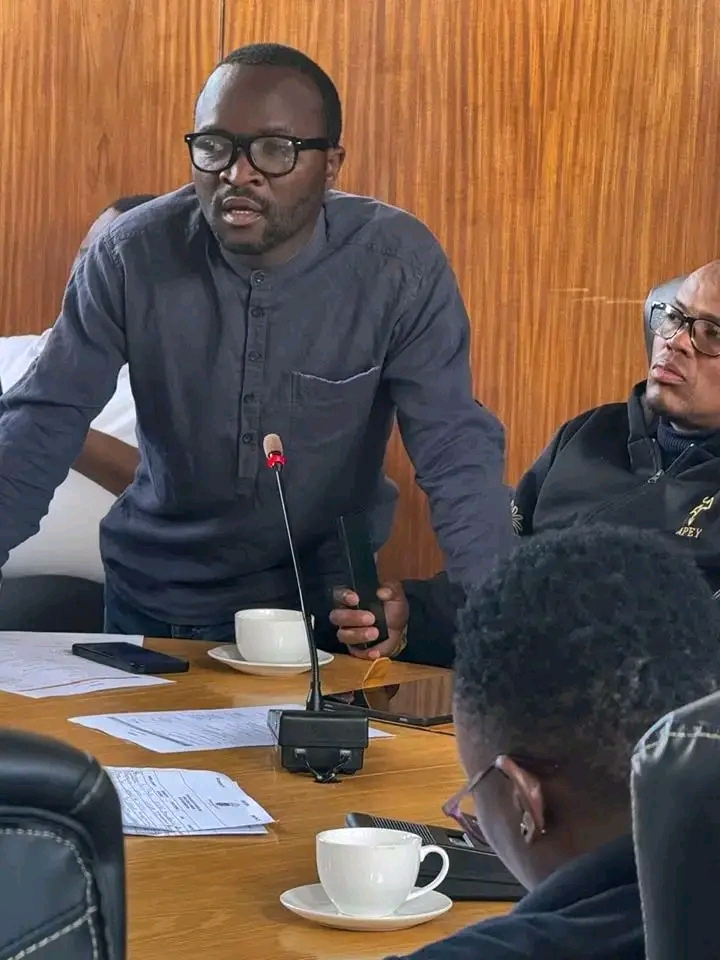
As an old boy at the school, a former councilor, tourism practitioner and a well-known community leader, Kafi delivered a fiery speech before the learners and their educators. Toverview caught up with him for a break down of his inspired address around ‘leaders who forgot the dream’ and his personal views particularly around education and development in his community.
The interview
eParkeni: Could you tell us what inspired the speech you gave to the district’s matric learners this past week?
Kafi: Well, it was the Biblical story about Nebuchadnezzar, the Babylonian king who forgot a dream that had deeply troubled him one morning. Basically, the point I was making is that, here was a king of a great empire – advanced in science, the arts and pretty much all aspects of industry and commerce. Yet because he had grown complacent, too comfortable, he began to forget to appreciate his blessings which eventually led to his kingdom experiencing a crisis. So much so that when he dreamed a very important dream one night, he couldn’t recall it when he woke up in the morning.
And despite all efforts by his finest, most accomplished scholars to help him remember it, ultimately it was lost to his careless ways. The overarching message I had for the learners is that they should never take the small things, like their dedicated teachers who show up to teach them every day, or the parents who sacrifice greatly in order to give them a future, for granted. But most importantly, that they should never forget the dreams that they, the learners, have for themselves.
eParkeni: As a former learner yourself at the school, Umso, what were some of the best take-aways you picked up during your time there?
Kafi: Coming from a very difficult upbringing marred by substance abuse and deprivation, school was more than just a place of learning. The feeding scheme programmes meant a much-needed meal to eat. Also, I tried to throw myself into whatever extra-curricula programmes that were offered. If there was a debating society being started, I was there. A choir, a Christian group, even a play – you name it, Kafi wouldn’t shy away from anything.
eParkeni: What, according to you, are some of the common problems affecting learners in our small communities over here?
Kafi: The first one, which I’ve actually raised with some provincial heads is the creation of safe Wi-Fi spaces for the community and especially for all learners. Over the years, a reliable connection to do one’s homework and research has become almost standard practice. But data is expensive. And, our children are often forced to find a connection from places that are not always conducive, like, for instance, taverns. Speaking of which … there seems to be an effort from the liquor industry to introduce free Wi-Fi to drinking establishments, which is, in and of itself, not really a bad idea.
However, I’ve since approached several people and businesses to pitch an idea to counter this by creating at least four Wi-Fi hotspots across the township where the community and especially schoolgoers can enjoy access in a safe space. Of course, the entire idea is meaningless without buy-in from the education department. As things stand many of these kids can be found accessing Wi-Fi at shebeens or outside establishments in town very late at night. This is quite troubling to witness. Access to data, in my opinion, should be elevated to a basic human right.
The other is that our tertiary institutions of learning do not seem to cater – or at least appear to often operate at a distance from the actual labour problems and needs facing the country. At a seminar I attended in China a few years ago around promotiong rural enterprises, I got to see how meticulous the Chinese are in ensuring that their schools of higher learning are shaped according to the labour market on the ground. If, as an example, there is a shortage of artisans, universities there try to encourage school leavers to enroll in that area of study. Not only would it be encouraging to see colleges like the TVET college in De Aar following suit but such an approach could greatly assist even with these extremely high unemployment numbers facing the country.
eParkeni: We understand that you have recently been involved in nature conservation specifically with the Doornkloof Nature Reserve near Colesberg. Mind elaborating a bit on that?
Kafi: Yes, I have done some liason work over there. The ranger/conservation/veterinary space has traditionally not had many African players. In fact, for the longest time, Africans did not consider careers in this area. Over the years, this has changed even though the uptake in our smaller towns remains relatively low. The goal therefore is to see a transformation in that regard and to inspire youths of colour to consider these as viable areas of participation and employment.
During my time with Doornkloof, I have also successfully pushed for the reserve to supply meat to soup kitchens and elderly homes. Such places contribute significantly to the community, and relying as they do, on funding, every donation of clothing, money and supplies go a long way.
eParkeni: You were recently employed by a tourism company in the Western Cape. But you’re now back in Colesberg. Is there a reason for that and would you tell us a bit more about the draadkar event you say you were once part of in Victoria West?
Kafi: Yes, I was fortunate to do some work in the Western Cape but now there is something else in the pipeline. Although I cannot divulge the details but it is in line with one of my greatest passions, namely tourism. The draadkar event I hope to someday write about myself.
eParkeni: Fair enough. The community of Colesberg know you as a deeply spiritual man, do you perhaps have any words of wisdom for our readers.
Kafi: Yes, it’s actually a quote from one of my best writers, Ellen G White. It goes: ‘The greatest want of the world is the want of men – men who will net be bought or sold, men who in their inmost souls are true and honest, men who do not fear to call sin by its right name, men whose conscience is as true to duty as the needle to the pole, men who will stand for the right though the heavens fall.’
Featured image: Mbulelo Kafi addressing a meeting. Source: Mbulelo Kafi Facebook page.