

Along Noupoort’s featureless plains, the Siemens 2.3MW wind turbines loom like a majestic import among the encircling flat-topped koppies. Enormous all 35 of them, almost futuristic surrounded as they are by the usual, unpretentious suspects of sparse shrubbery, uniform matchbox homes and the windpompe on this prehistoric Karoo promenade. At an imposing 99m tall, the long blazes whirl sluggishly in the dusty gusts blowing through the 7500-hectare eponymous wind farm located in the Umsobomvu Municipal area.
This is Noupoort Wind Farm. With its promise of employment, a few community projects for the townsfolk, and the life-saving injection it has jabbed into the local economy, it has been a hot topic even nine years since the R1.9 billion project was completed in 2016.
Also, because before the contracting companies had arrived, a R1500-a-month rent from lodgers was almost unheard-of in the local townships, Colerberg’s Kuyasa included. But this is what the newcomers were offering, backed by company assurances, and if you had a spare room, or an RDP home, it was a pretty good deal.
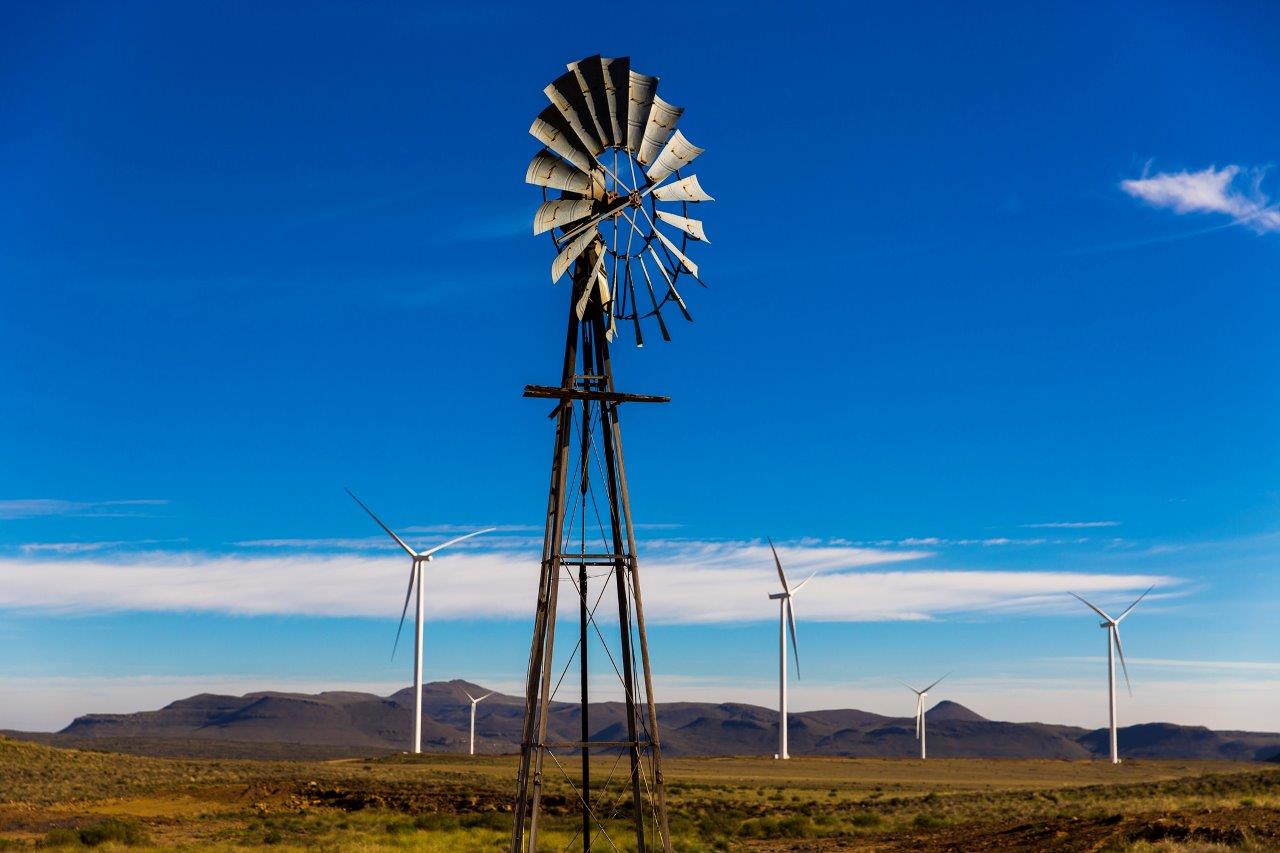
At its peak, the 80MW wind farm generates some ‘304 800MWh of clean renewable energy per year and is expected to supply electricity to power up to 91 835 South African homes.’ The project also prides itself of being ‘the first wind farm to successfully achieve operations as part of the third round of the Renewable Energy Independent Power Producer Procurement Programme (REIPPPP).’
On his various visits to the Northern Cape, President Cyril Ramaphosa had reiterated government’s big plans for the province, placing it at the forefront of the clean energy revolution. Calling it a province ‘on the move’ in July, ironically at the Sol Plaatjie University – which first opened its doors in 2014 – is in itself a depiction of a province that seems to be finally getting the attention it so desperately needs.
If gold is what built Johannesburg, it is energy that will bring Kimberly – often reduced to a city of government buildings than an economic powerhouse – back to life. The province is home to 55% of the country’s solar developments as well as 25% of its wind energy projects. Also, its ‘world-class solar irradiation levels’ have ‘pulled in major investments, making the Northern Cape a hotspot for renewable energy growth.’
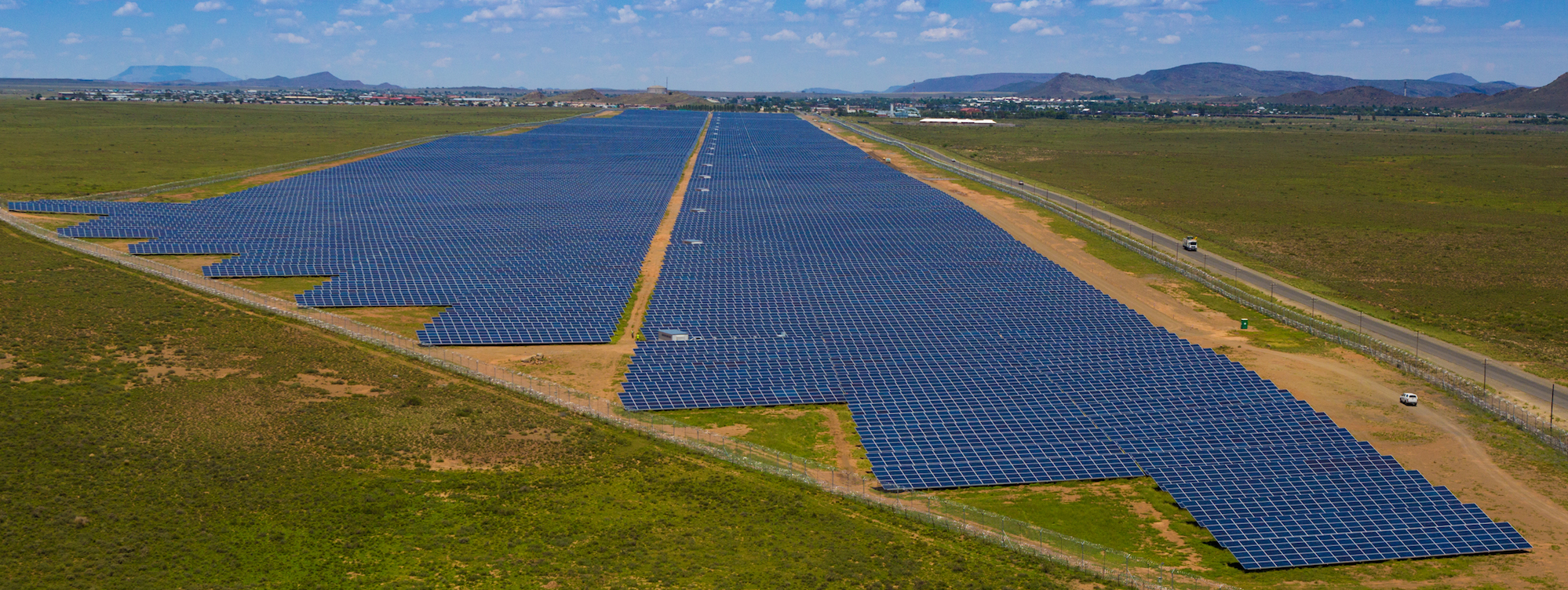
The Northern Cape Green Hydrogen strategy was announced in 2021 and there is a masterplan for a green hydrogen Special Economic Zone being set up. With a capacity to possess ‘everything that is needed to make green hydrogen in large quantities: great solar and wind resources, lots of land and provincial and national governments eager to harness the energies of the private and public sectors,’ the Northern Cape is well-suited. And, now the Noupoort project, which we’d downplayed in assuming it was solely made up of the wind turbines is still going strong. Turns out, with sprawling solar panels on an adjacent piece of land, it’s a far bigger story than the brief we’d been given. Add to this the sprawling panels already up in the nearby De Aar Solar Power project and the grand idea seems to be taking shape.
However, even with projects of this magnitude, the social skirmishes and disparities will clearly not be disappearing overnight. Since the expansion of the Noupoort project, we’ve reported on protests – some of which looked looked like they might turn deadly. Rocks and burning tyres were used to disrupt traffic along the N1 highway outside Colesberg. The bakkie of a local politician was torched and tensions remained high between various political and civic interest bodies.
Those, it would seem, have mainly downscaled from passive aggressive slurs and non-violence. There remains the strong sentiment that employment here is weaponised and political and seems to favour 1) those from certain political parties 2) the residents of traditionally black townships than, for instance, their Coloured peers.
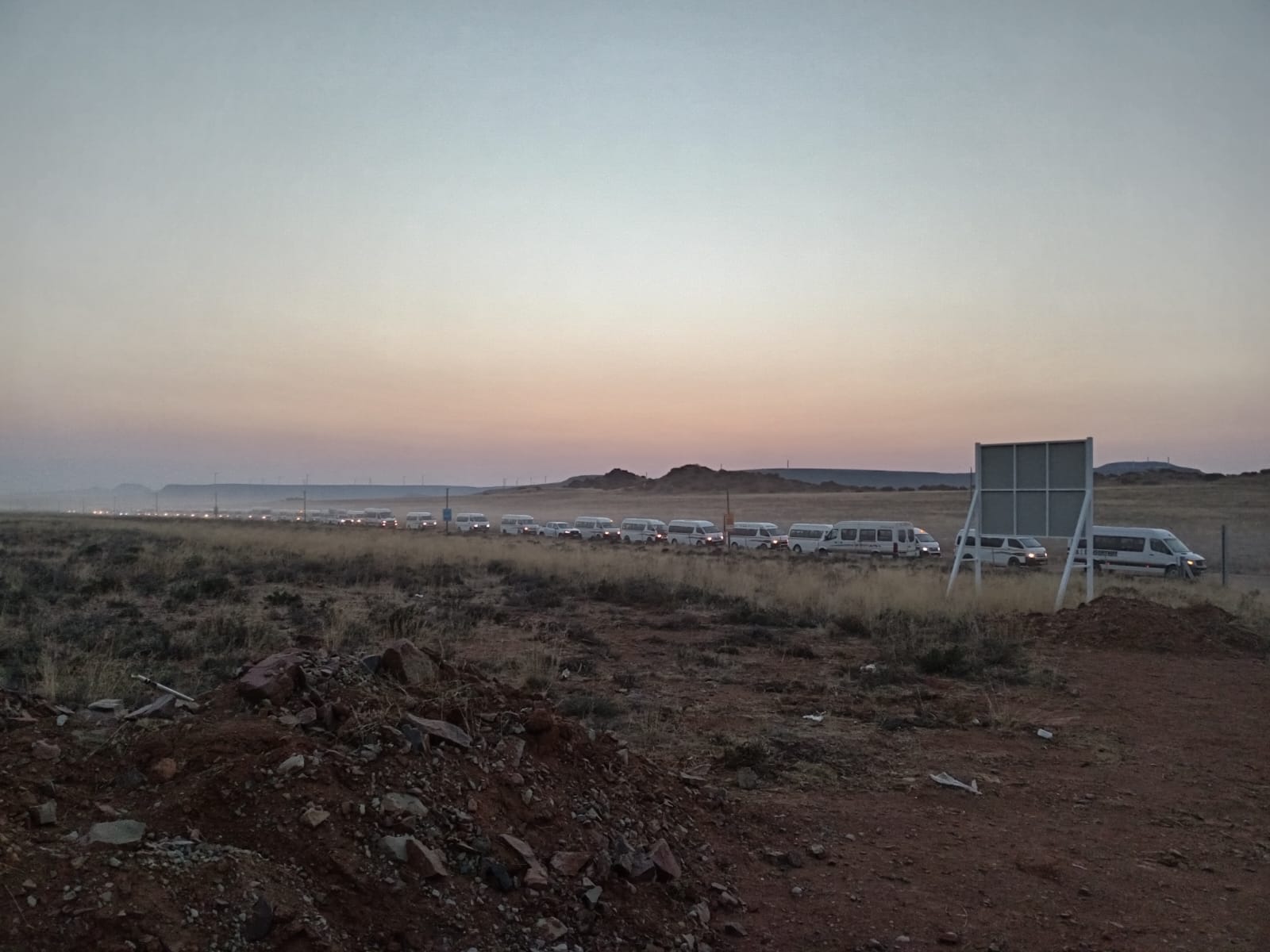
But for Noupoort, the opportunities are written in the traffic. Every morning an unfamiliar traffic jam snakes into town as scores of minibus taxis roll up to disgorge hundreds of employees from surrounding towns. Reminiscent of a bustling city taxi rank than the quiet streets of an obscure railway town, this is where one realizes that here is a project that could potentially change many lives.
Indeed, there are many such lives who’ve been impacted, especially youths, for a long time reduced to statistics in the country’s joblessness bloodbath. We see them every morning rising before the sun is up and huddled together along Kuyasa’s main roads awaiting transport. Doors have opened up to local sub-contractors, taxi owners and security companies, resulting in more buying power for locals.
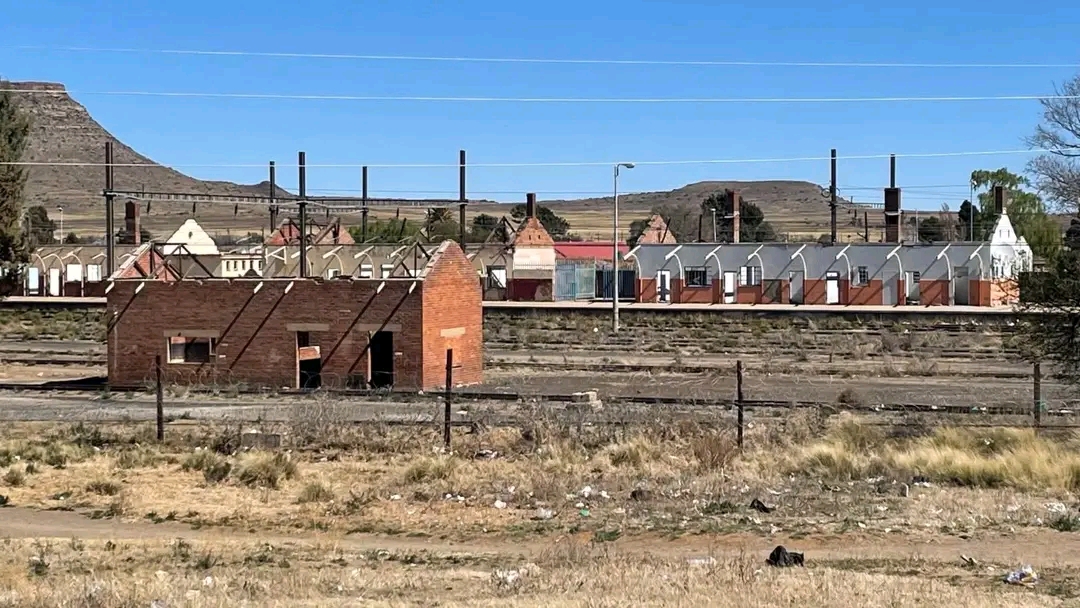
This boom, however also takes place alongside the dilapidation in local infrastructure, the most glaring of which is the railway, vandalised and gutted, standing as a crumbling pity to what the town once looked like.
This had initially been meant to be an in-and-out report on the developments taking place at the place that many residents know as eNju. However, a few Q&As with those on the periphery and the story took on a life of its own. The technical stuff is available at the click of a button. The social impact thereof, though, requires some legwork, sitting down with the players – those at the forefront and those unseen – and documenting the experiences of both.
Here, it soon became apparent, was a wonderfully heartbreaking story of development rubbing shoulders with things falling apart. One cat off to his next shift while the other is ‘scrounging for her next meal.’ Of course, we agree that progress is almost always a good thing but ours is also to give a voice to those who’ve been kissed by its kind hand and those who might feel left by the wayside. Catch you in part 2.
Featured image: Wind turbines at the Noupoort Wind Farm. Source: Noupoort Wind Farm website.