
Three years ago, 81% of Grade 4 learners in South Africa could not read for meaning. This week the Nal’ibali Trust won the prestigious Library of Congress International Literacy Prize, taking home a cool $50 000 cash prize while at it. More than a decade, the NGO has been at the forefront of initiatives aimed at cultivating not only a culture of reading amongst the youth but also placed emphasis on the importance of mother tongue education and literature. Their net is cast wide and dabbles in programmes around reading for pleasure, prioritising stories from marginalised languages, platforming upcoming writers, and an array of other areas not least of which is to employ scores of ambassadors across the country.
In conferring this prestigious international award, not only has the world paid recognition to the organisation’s indispensable role in the fight against the alarming literacy statistics but here at home it has again significantly highlighted the importance of NGOs in the country’s aspiration towards a better, more functional and equal society. On many fronts, NGOs have been the thorn in the flesh of government – often whipping them into acting in the best interests of the marginalised and voiceless when the state would otherwise be dragging its feet. Although government is often quick to take credit for much of the social justice initiatives accorded to these peripheral communities, it has been the tireless work; marches, pickets, putting one at personal risk and costly court action that has often forced the state’s hand to act. The case studies are overwhelming.
In the shameful ignorance of former president Thabo Mbeki’s AIDS denialism, a time when some of the most educated members of his Cabinet were wilfully brandishing ‘beetroot’ and ‘garlic’ as the snake oil to treating the syndrome, government had turned a blind eye to the scourge and deaths that were affecting those – the poor in particular – afflicted by the condition. The ruling ANC stood obstinately by Mbeki and, back then, to speak out against the Essex graduate was hardly advisable, especially when you were nothing but a ragtag organisation mostly dependent on donor handouts. But behind the scenes, conflicted health care personnel reportedly had these ‘secret meetings where brave members of the Department of Health didn’t so much go behind the health minister’s back but did things that were on the fringes of being acceptable.’
It was in the midst of these tense times that the Treatment Action Campaign (TAC) began staging protests, publishing op-eds and never missing the opportunity to openly confront political leaders at every presser or public appearance. By the time Mbeki’s successor, Jacob Zuma, came into power, what better way was there for him to quickly gain favour with the masses than to acquiesce to the voice of activism that had been loudest all those years? In 2009 he would launch the free, scaled-up rollout of antiretroviral treatment (the largest in the world) and Zuma became a hero overnight.
At the end of May, the Foundation for Alcohol-Related Research (on whom this publication has previously reported) sadly closed its doors. Around the early 2000s, previous Northern Cape Department of Health District Manager, Ms Mariette Eckhard had become increasingly ‘concerned about the high level of spontaneous abortions, still births, neonatal deaths, low birth weights and poor health of the newborn babies in De Aar.’
A few inquiries eventually led her to FARR founder, Prof Denis Viljoen, and in no time their now-groundbreaking research and project in the area began. FARR’s research in the Western and Northern Cape would reveal figures that would leave both academics and government in disbelief. These two provinces exhibited the highest figures for Fetal Alcohol Spectrum Disorder (FASD) anywhere in the world. For years, SA had been living with these shocking numbers but until the NGO’s in-depth research nobody had known. Perhaps even more disappointing is that despite their phenomenal contribution in these Karoo communities, nobody stepped up to assist when it started becoming clear that the money was running out and that there was still a major role for them to play in as far as giving access to what can be a very expensive condition to diagnose and live with.
In 2014, 5-year-old Michael Komape drowned in a pit latrine at a school in Limpopo. The legal advocacy group Section27 took up the deceased’s family’s case against the state and ensured that not only were the family awarded damages but the organisation also sought to impel the Department of Basic Education to come up with a comprehensive plan to eliminate pit latrines entirely from schools. From education to environmental matters, Section27 have been at the coalface of some of SA’s most high profile cases.
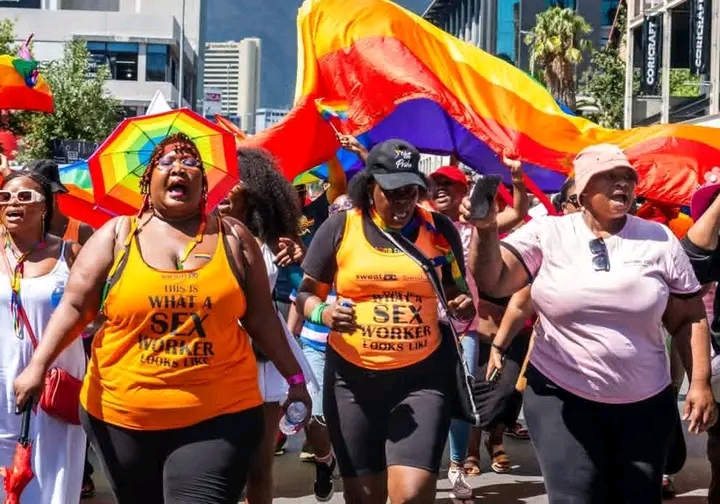
A decade ago, being a sex worker meant constant run-ins with law enforcement and nights in a holding cell. Today, the lines are blurred. Although sex work remains criminalised in the country, consistent activism by the Sex Workers Education and Advocacy Taskforce (SWEAT) has seen the reviewing of existing laws, the then-ruling ANC putting out a resolution towards the decriminalisation of sex work at its 2017 Elective Conference and – I dare say – sometimes even relaxed the cavalier operations of police when dealing with women in the industry. In various parts of the country this has resulted in a grey area where police often simply turn a blind eye, allowing for the emergence of health facilities specifically tailored to the needs of sex workers.
In instances where government has either failed, was incapacitated, or was completely unaware of a certain urgent matter, it is often NGOs who prove to be the saving grace. Outside of the aforementioned examples are a myriad cases that would likely never have been resolved had it not been for these groups. From high-profile examples streamed on national television right down to the old woman who runs a soup kitchen in the neighbourhood, NGOs have steadily become a very important lifeline to those roughing it on the margins. These people are saving the rhino, feeding the poor and bringing dignity to women who barely ten years ago were subjected to the worst kind of treatment in our inner-city streets. From Gift of the Givers to Sisonke Gender Justice, in neglected communities, these are often the first and only people who show up eager to bring relief or to say a prayer.
Featured image: SWEAT activists out in support of Sex Workers’ Rights Day in June this year. Source: Sex Workers Education and Advocacy Taskforce Facebook page.