
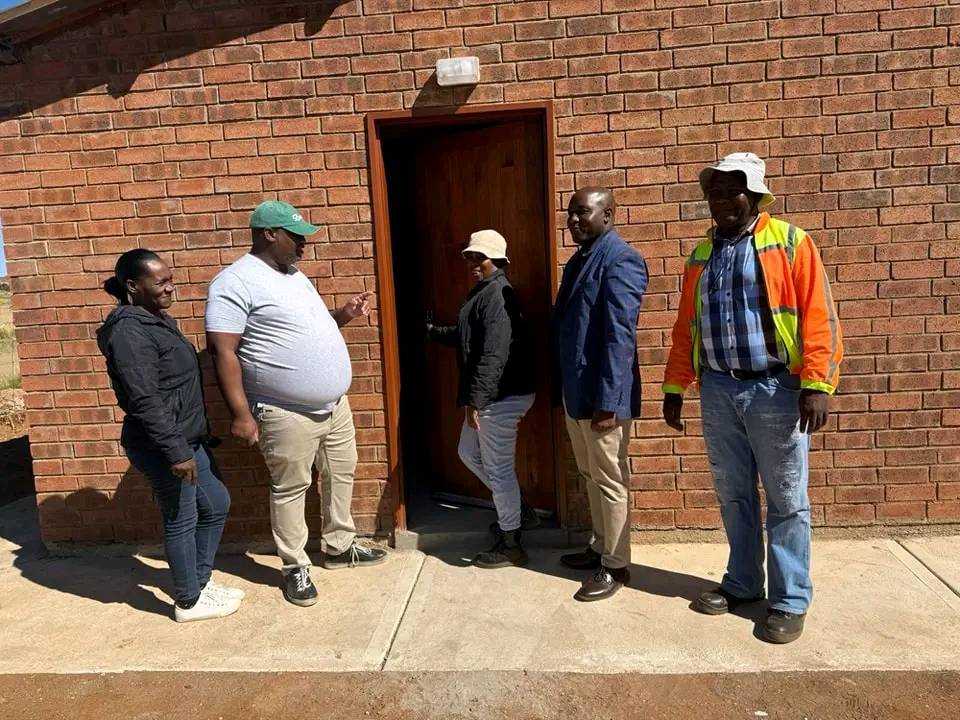
On their Facebook page on 19 September, Colesberg’s Umsobomvu Municipality handed over eight RDP houses to beneficiaries, igniting an immediate backlash. The Ou Boks project, initially tauted as a pioneering Thabo Mbeki presidential project in 2006 was aimed at relocating some beneficiaries from Ou Boks – the town’s oldest township – so as to make way for an ambitious inftastructural development initiative, which has since ground down to a white elephant and an indictment on local governance.
Many of the houses are now gutted; serving as dope dens or as accommodation to vagrants, teenage delinquents and truants. After much consternation and dissatisfaction amongst residents spanning almost a decade, it was announced that some fifty new homes were being built. This whilst plots of land were being made available at a reduced cost to residents.
By most indications, this was meant to counter the pervasive accusations of inneficiency and alleged corruption dogging the municipality’s handling of the project and to send the message that the powers that be were finally listening to the people. In December 2022, then Minister of Human Settlements, Mmamoloko Kubayi in the company of prominent local and provincial suits visited the town.
At this imbizo held at the Riemvasmaak Stadium, they fielded a heap of questions from disgruntled residents some of whom were still awaiting a new home or were openly accusing the municipality of underhanded dealings in the project. Back then, she’d promised to return to the town and personally see to it that deserving beneficiaries were finally handed over their homes. Not long after, the building of the fifty homes began.
So, it is against this backdrop that the municipality’s social media post of the handing over of the eight homes and the immediacy of social media got tongues wagging. Although the Facebook page is mostly characterised by “likes,” this time a few residents weighed-in quite severely on the allocation.
Sizwe Tyebela, a resident commented that since 1997 when he’d first applied for a house, he’s seen many of his fellow applicants receiving homes only to resell them.
Comlents
A certain Mar Katise says he applied in 2005 and still waiting. He goes on to allege that the ruling ANC at the municipality places a tight leash on jobs and therefore he has long lost hope.
Siyolise Mtshiselwa says her husband was an anti-apartheid activist who died with the wounds of his activism all over his body. He applied many years ago but now that he’s passed on, she is told that the application is no longer valid. What about her and the kids he left behind she asks?
Mina Pieterse says that youngsters and people who already own homes in the township are notheless getting homes, with Vanyha Lutchmea adding that she feels unseen in all of this.
Although mostly made up of displeased commentary, there were a few words of congratulations, with Olwethu Madikane congratulating the beneficiaries and expressing hope that perhaps others will also be awarded a home in future.
The puritanical argument that social media has created a lazy form of journalism that ignores one of the key tenets of the profession, namely going out to where the story is and talking to people inspired this piece. Whether it’s laziness or rather an opportunity to write about how the people really feel, I do not know.
What is quite clear is that with the local government elections due next year, this Karoo municipality finds itself haunted by much of the issues confronting its counterparts elsewhere in the country. The nationwide quest for dignified housing, equality and access to adequate service delivery remains at the heart of public discourse.
Furthermore, there is a desire to seek a local government that would ensure that all people are seen, regardless of their race or political affiliation. This might explain why the Umsobomvu Residents Association, URA, a small-time put-together, now occupies four seats in the town’s historically ANC-dominated Council.

Or why in July this year, the town was almost totally shut down when the EFF took to protest at Umsobomvu about the municipality’s shutting down of electricity to those who fail to pay their rates in the mostly Coloured Lowryville Township. They claimed that one of their residents had passed on allegedly because his power was cut off and therefore he couldn’t use his electric respirator.
They were also demanding prepaid meter boxes from Eskom instead of those from the municipality. The subliminal accusations of preferential treatment for the African residents of Kuyasa versus their Coloured cousins in Lowryville were hard to miss. And the numbers, mobilised by an EFF seemingly making inroads in the town were enough to frighten local businesses into closing up shop for the day.
So, is it lazy journalism using social media to file a story? If I could list all the unanswered emails, phone calls that ended ‘with I’ll get back to you’ and what appears to be a culture aversive to the media that I’ve encountered to various government departments, then the answer is NO! Whether the story was on innocuous, non-political yet very important social issues like fetal alcohol syndrome or issues around education, nobody seemed to want to talk, not even off the record.
Those who seemed open to it would first have to call a higher-up, after which the response was that I should talk to someone at the provincial department. From there, the process was predictable; going down the labyrinth of the manual call dispatcher, sometimes ringing dead, sometimes finding the spokesperson and getting his email, sending a list of questions then … dead silence.
For a freelancer, this means there’s no story, so no payment, a rather common problem – I hear – amongst colleagues from various other publications. So much so that a writer from elsewhere put up a heady, scathing thumb-lashing on her Facebook basically telling these big wigs that their attitude sucks. So, when all else has failed, what do you do except to scroll through their social media to find something relevant to the story at hand to quote?
As with Colesberg’s RDP housing problems, it is the people who are always willing to talk, although often insisting on a pseudonym, because much like wearing the wrong political colours, saying too much might mean having to kiss your chances of ever landing a job goodbye. What is clear, though, is that many of the people no longer seem to care. The years of waiting for things like housing mean they have nothing to lose. And with the local government elections rolling up, this should startle those who ignore the voices on the streets. Or, in this case, on social media.
Featured Image: A Colesberg resident receives an RDP house. Image: Umsobomvu Local Municipality Facebook page.